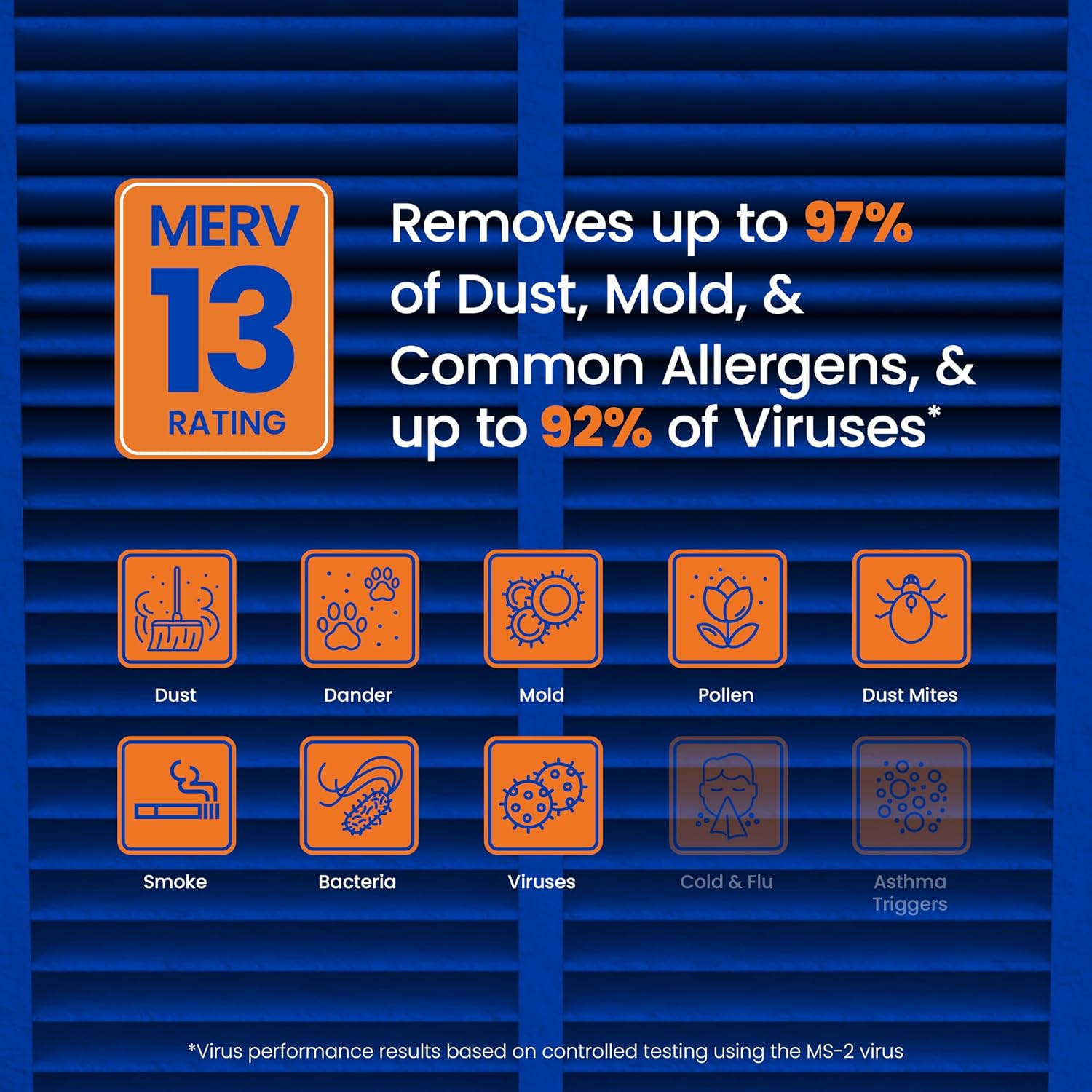
If you’ve ever stood in the filter aisle — or scrolled through a confusing wall of product listings — wondering whether you should spend $15 or $75 on a furnace filter, you are not alone. The filter that slides into your HVAC system is the unsung gatekeeper of your indoor air. It catches dust, pollen, pet dander, and fine particles that would otherwise recirculate through every room. MERV — Minimum Efficiency Reporting Value — is the industry rating that tells you how fine a net the filter casts: MERV 8 catches larger dust, MERV 11 catches most allergens, MERV 13 captures particles as small as smoke and fine bacteria. The higher the MERV, the cleaner the air — but only if your HVAC system can move air through it without straining. This article breaks down the three main filter families competing for your whole-home setup: AprilAire’s deep-media cartridges, Filtrete’s flat-panel filters, and the growing field of third-party compatible replacements. We’ll show the math, name the tradeoffs, and give you a clear decision rule at each tier.
| EDITOR'S PICKGenuine AprilAire 213 Replaceme… | Mid-tierGenuine AprilAire 413 Replaceme… | Budget pickFiltrete 16x20x1 Air Filter | |
|---|---|---|---|
| MERV Rating | 13 | 13 | 11 |
| Nominal Size | 20x25x4 | 16x25x4 | 16x20x1 |
| Pack Count | 2 | 1 | 2 |
| Brand | AprilAire | AprilAire | Filtrete |
| MPR Rating | — | — | 1000 |
| Filter Life | — | — | 3 months |
| Price | $106.99 | $57.88 | $21.99 |
| See on Amazon → | See on Amazon → | See on Amazon → |
The Core Tradeoff: Deep-Media vs. Flat-Panel Filtration
Here is the structural divide that most filter comparisons gloss over. Filtrete and similar flat-panel filters are roughly one inch thick. AprilAire whole-home filters are deep-media cartridges — typically four to five inches of folded filter material — designed to slot into a dedicated media cabinet installed inline with your HVAC ductwork. These are fundamentally different categories, and treating them as interchangeable MERV-number comparisons is the source of most consumer confusion.
Why does thickness matter? The U.S. Environmental Protection Agency’s Guide to Air Cleaners in the Home explains that filter resistance to airflow — called pressure drop — increases with filtration efficiency. A thin MERV 13 filter forces your blower motor to work hard against dense, restrictive media packed into a small surface area. A deep-media MERV 13 achieves the same particle capture across a much larger surface area, so airflow resistance stays manageable. This is the engineering reason an AprilAire MERV 13 and a 1-inch Filtrete MERV 13 do not impose equal strain on your system — even though both carry the same MERV number on the box.
ASHRAE Standard 52.2 — Method of Testing General Ventilation Air-Cleaning Devices for Removal Efficiency by Particle Size, published by the American Society of Heating, Refrigerating and Air-Conditioning Engineers — is the testing framework behind every MERV rating. It evaluates filters at specific airflow rates. An AprilAire 213 or 413 installed in a properly sized media cabinet was engineered with that pressure-drop constraint already solved at the product-design stage. A 1-inch flat-panel MERV 13 was not.
If X, then Y — Rule 1: If your system uses standard 1-inch filter slots and your HVAC technician has flagged airflow concerns, stay at MERV 8 or below for flat-panel options — or budget for a deep-media cabinet installation rather than forcing MERV 13 through an undersized slot.
Comparing the Three Filter Tiers
Budget Tier: Filtrete 1-Inch Flat-Panel Filters (MERV 8–11)
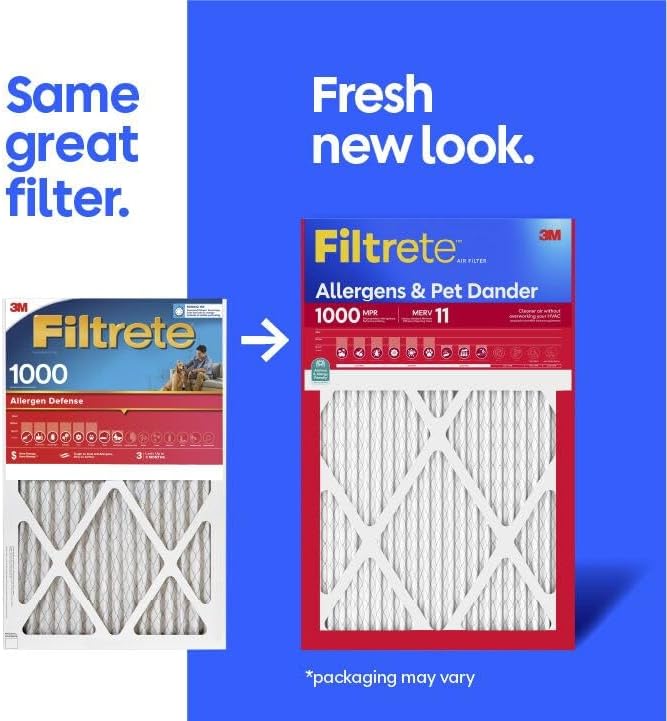
Filtrete’s 1-inch flat-panel filters are the most accessible entry point for HVAC filtration — available at nearly every hardware retailer and priced between $10 and $30 per filter depending on MERV rating and size. For households without specific allergy concerns, renting rather than owning, or running older HVAC equipment with limited blower capacity, a Filtrete MERV 8 is a serviceable baseline.
The limitations are real, though. At MERV 11, airflow restriction begins to matter in systems not engineered for it. Consumer Reports, in its buying guidance covering air purifiers and HVAC filters, notes that filter efficiency ratings must be weighed against the system’s rated airflow capacity — a MERV number alone does not tell you whether the filter is appropriate for your specific equipment. Owners in HVAC communities consistently report technician recommendations to stay below MERV 10 in flat-panel slots on aging or lower-capacity systems.
Replacement intervals for flat-panel filters run 1–3 months in typical residential use, which adds up: at $20 per filter and monthly replacement in a pet household, annual filter costs can reach $240 before you’ve bought a single room air purifier.
Filtrete
$21.99
In stock on Amazon
Check price on AmazonMid-Tier: AprilAire 210 (MERV 11) — The Allergy-Household Workhorse
The AprilAire 210 is the entry point into the deep-media cabinet system, and for the majority of allergy-affected households it is the right stopping point. At MERV 11, the 210 efficiently captures particles in the 1–3 micron range and larger — a category that covers dust mite debris, mold spores, and pet dander, which are the primary triggers for most seasonal and household allergies, per EPA Guide to Air Cleaners in the Home particle-size guidance.
Owners of the 210 consistently report strong fit-and-finish satisfaction and genuine allergy relief for households managing pets and pollen. The deep-media format means replacement intervals of 12–24 months rather than the flat-panel’s 1–3 months — a meaningful operational difference. At a direct-purchase price of roughly $25–$40 per filter with an annual replacement cadence, the 5-year filter cost runs $125–$200, compared to $240 or more per year for monthly flat-panel replacement in the same household.
The MERV 11 ceiling also matters for system compatibility: the Indoor Air Quality Association (IAQA), in its filter selection guidance for residential HVAC systems, notes that MERV 11 in a properly sized deep-media cabinet represents a well-documented sweet spot for residential applications — sufficient efficiency for most allergen management without the pressure-drop concerns that begin to emerge at MERV 13.
Genuine
$57.88
In stock on Amazon
Check price on AmazonPremium Tier: AprilAire 213 / 413 (MERV 13) — For Asthma, Smoke, and Fine-Particle Households
The AprilAire 213 and 413 share the same MERV 13 deep-media performance, differing primarily in cabinet compatibility. This is the appropriate choice for households where someone has physician-managed asthma, where wildfire smoke is a seasonal reality, or where post-renovation fine particulate is a concern.
ASHRAE Standard 52.2’s particle-size efficiency methodology establishes that MERV 13 adds meaningful capture in the 0.3–1 micron range — a category that includes smoke particulates, some bacterial aerosols, and combustion byproducts not captured by MERV 11. Owners of the 213 and 413 tend to report more dramatic subjective improvement than 210 owners, particularly in households with asthmatic family members. The performance step is real and measurable, not marketing language.
The IAQA’s residential filter guidance notes that MERV 13 is the practical ceiling for most residential deep-media applications before diminishing returns and system-compatibility concerns emerge. For households that need it, the 213 or 413 justifies its modest price premium over the 210 — direct-purchase pricing typically runs $35–$50, versus the $55–$75 that HVAC contractors charge for the identical OEM filter at installation service calls.
That contractor markup is the clearest quantifiable win available to deep-media filter owners. Owners document the gap consistently: purchasing the same OEM AprilAire filter directly runs approximately 40–55% less than purchasing through a contractor. Over a five-year window with one to two filter replacements per year, that gap represents $80–$175 in real savings. The first installation of a media cabinet warrants professional involvement — sizing, duct compatibility, and correct seating matter. Post-installation filter replacement is a 10-minute, no-tools DIY task.
Genuine
$106.99
In stock on Amazon
Check price on AmazonThird-Party Compatible Filters: The Risk Is Legible If You Look for It
The third-party compatible filter market — represented by brands like TruFilter and various unbranded options — targets the price gap between OEM AprilAire direct pricing and what contractors charge. The appeal is understandable. The risk is real.
OEM AprilAire filters are manufactured to specific dimensional tolerances and media rigidity specifications so the cartridge seats firmly in the media cabinet, can be extracted cleanly at replacement, and maintains its pleated geometry under airflow pressure. Third-party manufacturers working from product dimensions — not OEM tooling — introduce variability in all three of those dimensions. A filter that is 1/8 inch too snug in the cabinet track, or built on a softer frame, can deform under suction and become difficult or destructive to remove.
This is not a theoretical concern. Owner accounts document filters damaged during removal — a physical failure, not a performance complaint. The Indoor Air Quality Association’s filter selection guidance identifies dimensional compatibility and bypass leakage (air flowing around rather than through the filter) as the two most commonly cited failure modes with aftermarket whole-home media filters. Neither failure is visible from the outside once the cabinet door is closed. Bypass leakage in particular can make a nominally MERV 13 filter perform at MERV 6 or lower in practice.
If X, then Y — Rule 2: Before choosing a third-party compatible filter on price, run the actual math. The price differential between OEM AprilAire filters purchased directly and third-party options is often $5–$12 per filter. Against the risk of a stuck or damaged filter requiring a service call — typically $80–$150 — the OEM direct-purchase math usually wins decisively. If you do use third-party filters, check frame rigidity before installation: a media frame that flexes noticeably under hand pressure is a warning sign of under-specification.
Does a Whole-Home MERV 13 Filter Replace Room Air Purifiers?
This question surfaces often enough in owner communities to address directly. The honest answer: partially, but not completely.
A properly installed whole-home deep-media system like an AprilAire 213 or 413 processes all air cycling through your HVAC — which, in a well-functioning forced-air system, means the full home volume turns over multiple times per day. For background particle management — daily dust, pollen, pet dander, general smoke — this provides genuinely effective whole-home coverage that a single room purifier cannot match by definition.
Where whole-home filtration has limits:
- Rooms with poor duct circulation. A basement workshop, sunroom addition, or bedroom with a single small supply vent may not receive adequate air changes per hour through the central system.
- Point-source pollutants. Cooking smoke, a hobby room with VOC-emitting materials, or a room where a household member is recovering from illness benefits from a dedicated room purifier with activated carbon for localized, high-frequency air cleaning.
- CADR considerations. Whole-home MERV 13 filtration does not carry a CADR (Clean Air Delivery Rate — the standardized measure of how quickly a purifier cleans a defined room volume) in the way a dedicated room unit does. The EPA’s Guide to Air Cleaners in the Home notes that whole-home filtration systems and room air purifiers are complementary, not competing technologies.
If X, then Y — Rule 3: If your primary concern is household-wide allergen and particle management, a whole-home MERV 13 deep-media system is your highest-leverage single investment. If you have a specific room with poor duct coverage, or a household member who needs targeted local protection, layer a room-level HEPA purifier on top — the two strategies reinforce each other rather than duplicating effort.
Frequently Asked Questions
Can I use a MERV 13 filter in any HVAC system? Not safely in all configurations. MERV 13 in a 1-inch flat-panel format can restrict airflow in systems not designed for it. MERV 13 in a deep-media cabinet — like AprilAire’s system — is engineered to manage that pressure drop. Always confirm with your HVAC contractor before upgrading MERV rating in a flat-panel slot.
How often do AprilAire deep-media filters actually need replacing? Owners consistently report 12 months in high-use or pet households, and up to 24 months in lower-demand environments. Visually inspect at six months — a deeply gray or clogged media face is your replacement signal regardless of the calendar.
Are third-party AprilAire-compatible filters safe to use? They can be, but dimensional tolerance and frame rigidity vary by manufacturer and production run. Compare the actual dollar gap against OEM direct-purchase pricing before assuming meaningful savings. The IAQA’s filter guidance identifies bypass leakage — invisible once the cabinet is closed — as the primary performance risk with aftermarket media filters.
Does a whole-home MERV 13 filter replace the need for room air purifiers? For general whole-home particle management, it provides coverage a single room unit cannot match. For rooms with poor duct coverage or point-source pollutants, room purifiers remain complementary. Whole-home MERV 13 raises the floor for everyone; room purifiers raise the ceiling in specific spaces.
How much do I actually save buying replacement filters directly vs. through my HVAC contractor? Owners report roughly 40–55% savings on the same OEM AprilAire filter purchased directly versus through a contractor. Over a five-year window, that gap represents $80–$175 in real savings — more if your contractor marks up significantly above regional norms. The media cabinet installation warrants professional involvement; the filter replacement itself does not.