If you’ve ever searched “how to filter wildfire smoke cheap” and ended up watching someone tape four furnace filters to a box fan, you’re not alone — and you weren’t being naive. That setup is called a Corsi-Rosenthal box, named for the engineers who popularized it during COVID, and it works by pulling room air through flat panel filters before the fan exhausts it outward. A MERV rating — Minimum Efficiency Reporting Value — tells you how small a particle a filter catches; MERV 11 traps most smoke-sized particles in the 1–3 micron range. The question isn’t whether the DIY approach does something useful. It clearly does. The real question is: for your specific situation, at your specific budget and use case, does it do enough?
This article gives you the honest comparison. We’ll look at where the box fan build genuinely wins, where dedicated purifiers earn their price tags, and — critically — where the gap between particle filtration and odor elimination becomes the deciding variable nobody tells you about upfront.
The Case for DIY: Where the Box Fan Build Actually Delivers
The first real advantage of the Corsi-Rosenthal build is filter surface area. A commercial air purifier’s filter is roughly the size of a sheet of notebook paper, curved into a cylinder. A four-panel box fan build uses four 20×20-inch filter panels, giving you roughly eight to ten times the filter face area of most compact units. More face area means air moves through the filter at lower velocity, which paradoxically improves capture efficiency and dramatically reduces resistance (measured as static pressure drop). The fan doesn’t have to work as hard, moves more air per watt, and the filters last longer before they need replacing.
CADR — Clean Air Delivery Rate — is the industry standard metric measuring how many cubic feet of clean air a unit delivers per minute for a specific pollutant type: smoke, dust, or pollen. The U.S. Environmental Protection Agency’s Guide to Air Cleaners in the Home (EPA, 2018) states that the general sizing rule is: CADR (smoke) × 1.55 ≈ the room square footage the unit can handle at one air change per five minutes. A DIY box build with a decent 20-inch box fan can legitimately serve a 400–700 square foot open living room during an acute smoke event — a coverage range that many commercial units under $150 struggle to match.
DIY Box Fan Build
Who it’s for: Large open spaces (600+ sq ft), acute wildfire smoke events, budget-constrained households.
| Configuration | Approx. filter face area | Estimated CADR (particles) | Street cost to build |
|---|---|---|---|
| DIY 4-panel MERV 11 box fan | ~1,600 sq in | 300–600 CFM (varies by fan) | $40–$80 |
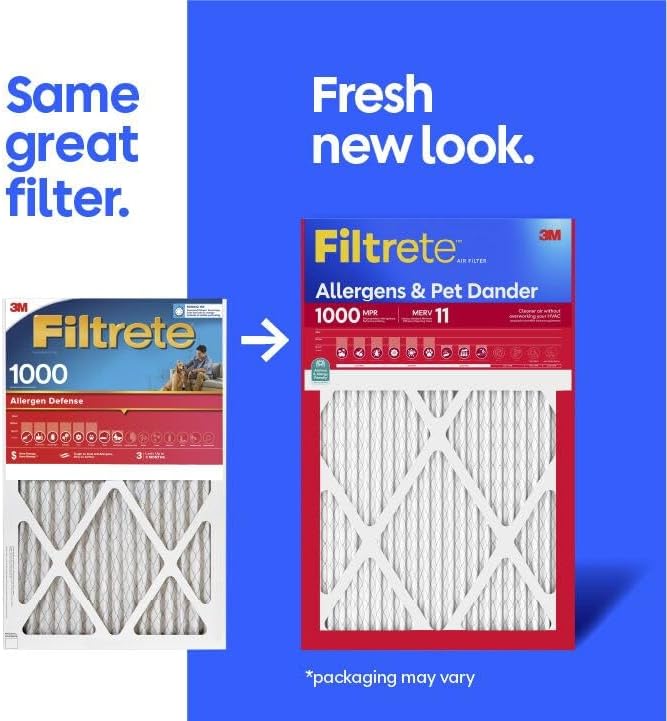
The second advantage is cost transparency. MERV 11 panels are commodity items sold under brands like Filtrete and available at most hardware stores. When they grey out, you replace them for roughly $8–$12 each. There’s no proprietary filter lock-in, no model discontinuation risk, and no subscription nudge built into an app. Per-square-foot-covered, the DIY build is hard to beat on particle removal alone.
Filtrete
$21.99
In stock on Amazon
Check price on AmazonEntry-Level Dedicated Purifiers
Who it’s for: Bedrooms and offices under 300 sq ft, renters who want a plug-and-play solution, households where overnight unattended operation is a priority.
| Configuration | Approx. filter face area | Estimated CADR (particles) | Street cost |
|---|---|---|---|
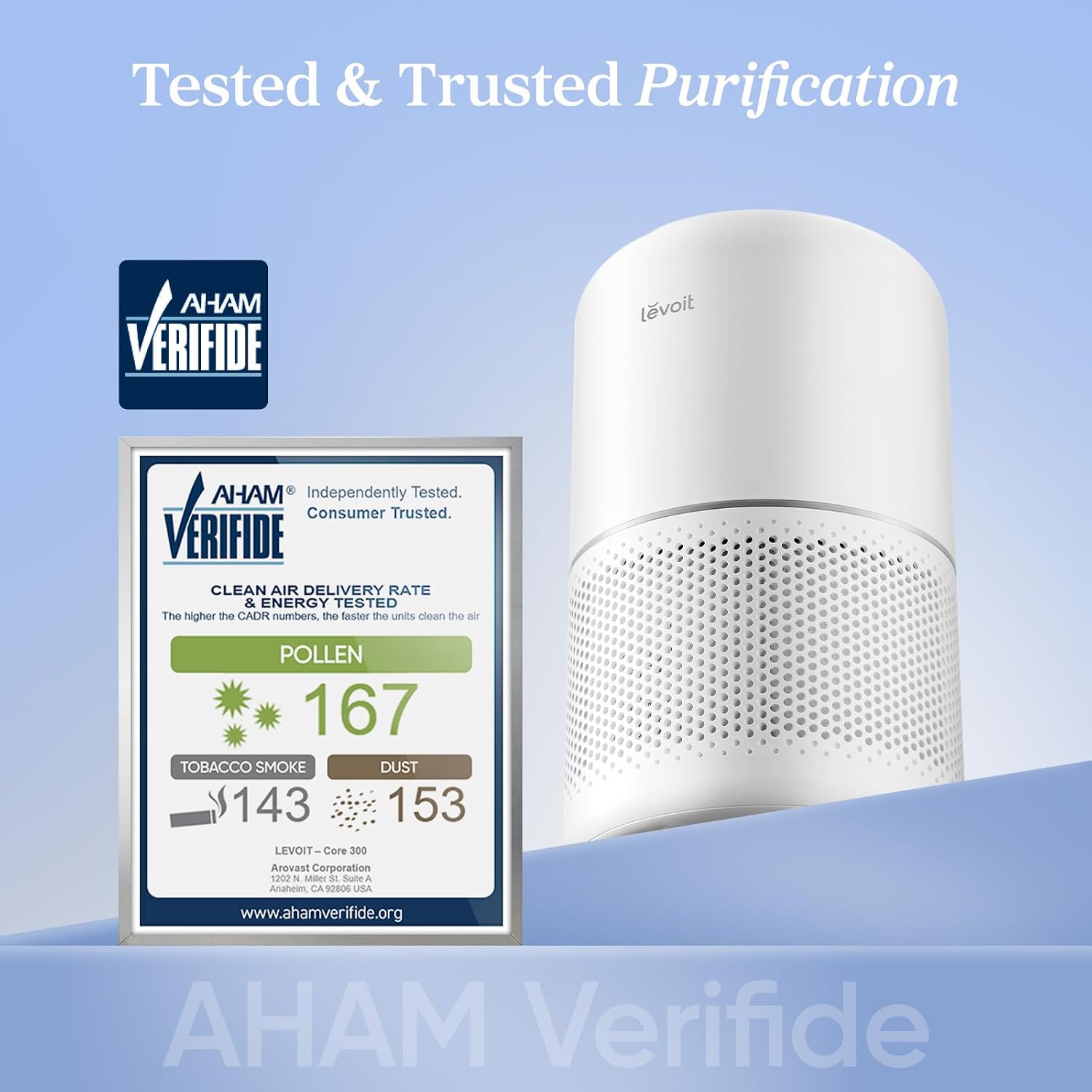
| Entry HEPA compact purifier (e.g., LEVOIT Core 300 class) | ~160–200 sq in | 100–150 CFM rated | $60–$110 |
Dedicated entry-level purifiers are engineered for continuous 24/7 operation with motor thermal protection built in from the factory. Wirecutter (The Best Air Purifiers, New York Times / Wirecutter, continuously updated) consistently notes that engineered continuous-duty motors are a genuine, if modest, advantage over repurposed box fans for unattended overnight use.
The trade-off is coverage. At 100–150 CADR (smoke), an entry HEPA unit covers roughly 155–230 square feet by the EPA’s sizing formula — adequate for a bedroom, undersized for an open living area during a heavy smoke event. And as Consumer Reports’ Air Purifier Buying Guide (Consumer Reports, 2025) makes clear, units that rely on thin carbon pre-filter sheets rather than meaningful granular carbon beds do little for gaseous pollutants and odors. Always verify the carbon layer depth, not just whether the word “carbon” appears in the filter name.
LEVOIT
$79.98
In stock on Amazon
Check price on AmazonMid-Range Purifiers with Meaningful Carbon Filtration
Who it’s for: Pet owners, cooking households, wildfire-prone regions where smoke smell — not just smoke particles — is the primary complaint.
| Configuration | Approx. filter face area | Estimated CADR (particles) | Street cost |
|---|---|---|---|
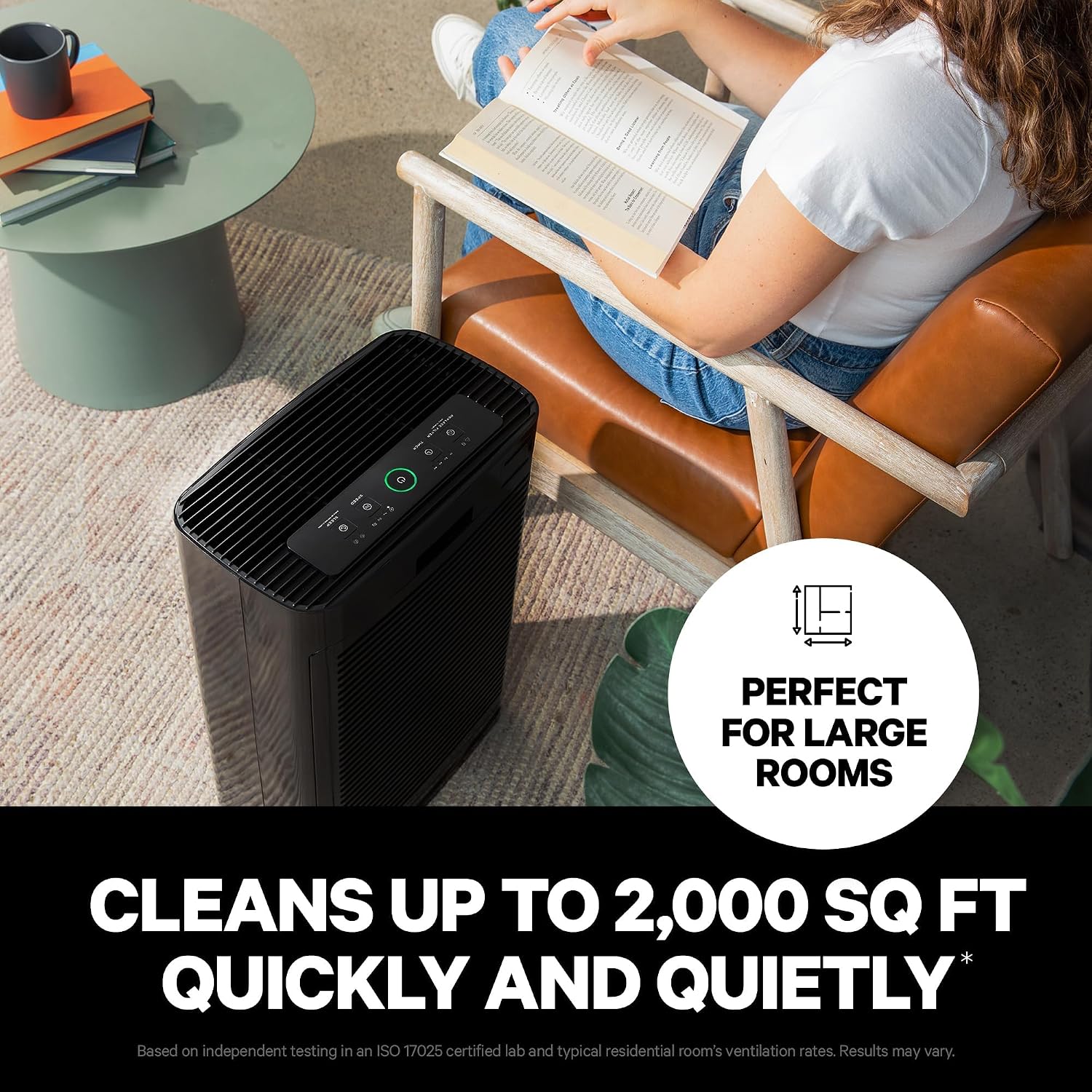
| Mid-range 360° intake purifier (e.g., PuroAir 240 class) | ~200 sq in (360° intake) | ~240 CFM rated | $150–$200 |
Here is where the DIY build hits a hard architectural wall. MERV and HEPA filters are mechanical sieves — they catch particles. What they cannot catch are VOCs — volatile organic compounds — the gaseous molecules responsible for the smell of smoke, cooking, pets, and off-gassing furniture. Activated carbon works through an entirely different mechanism called adsorption, where gas molecules bond to the enormous surface area of carbon pores. A meaningful carbon stage — typically 1–5 lbs of granular activated carbon in serious units — substantially reduces odor, formaldehyde, and other VOCs.
ASHRAE Standard 52.2, Method of Testing General Ventilation Air-Cleaning Devices (ASHRAE, 2017), treats particle filtration and gas-phase filtration as separate performance categories precisely because they require different materials and different engineering. That separation is the framework that explains why two units with similar smoke CADR ratings can perform very differently in a smoke-plus-odor scenario. A thin carbon mat containing only a few grams of carbon is not the same product as a unit designed with pounds of granular activated carbon — and no amount of MERV upgrading will change that for a DIY build.
The 360-degree intake design found on mid-range dedicated units also earns real-world credit in rooms where placement isn’t ideal. Rather than drawing air from one face only, the unit pulls from all directions — meaningful in a bedroom where furniture constrains positioning.
PuroAir
$259.99
In stock on Amazon
Check price on AmazonThe Odor Problem: Where No DIY Patch Applies
This is the decisive fork in the road, and it deserves a section of its own because marketing language routinely obscures it.
Particle filtration and odor elimination are not the same thing and are not solved by the same technology. A MERV 11 box build — even upgraded to MERV 13, which the EPA’s Guide to Air Cleaners in the Home recommends as worth the modest upcharge for better fine-particle capture — will still do essentially nothing for the smell of cat litter, cigarette smoke residue, cooking odors, or VOCs off-gassing from new flooring and furniture.
Wirecutter’s Best Air Purifiers coverage specifically calls out activated carbon depth as one of the most under-specified variables in the entry-tier segment. Thin mats marketed as “activated carbon filters” may contain only a few grams of carbon — functionally decorative compared to the pounds used in units designed to address chemical sensitivities or persistent household odors.
If your primary complaint is odor rather than visible haze, the DIY build is the wrong tool regardless of its particle-removal credentials.
The Overnight Safety Question
Running a box fan with MERV panels overnight is generally considered safe by the same logic that makes running any box fan overnight safe — with one important caveat. The DIY build increases the static pressure the fan motor works against, which means it runs warmer than it would unloaded. Consumer Reports’ Air Purifier Buying Guide (Consumer Reports, 2025) and fire safety guidance from multiple consumer organizations recommend using a fan with a UL-listed motor and ensuring filter panels are secured so they cannot be sucked into the blades if a seal fails. A fan that is already aging or rated for intermittent use is more of a concern than a newer, properly sized unit.
Dedicated air purifiers are engineered for continuous 24/7 operation with motor thermal protection — that’s a real, if modest, advantage for set-it-and-forget-it overnight use. If you’re running a DIY build overnight, use a newer UL-listed fan and tape all panel edges securely before sleeping.
The Decision Framework
The variables that actually drive the decision are: your primary trigger (particles vs. odor vs. both), your room size, and your operational requirements (continuous unattended vs. event-based use).
Acute wildfire smoke, large open space (600+ sq ft), odor is secondary: The DIY MERV 11 box build wins on cost-per-CADR almost every time. You’re buying particle removal at scale, cheaply, with filter costs you can model in advance. MERV 13 is worth the incremental cost if you can find panels that fit your fan without choking airflow.
Ongoing odor — pets, cooking, litter, chemical sensitivity — in a bedroom or office (under 400 sq ft): A dedicated unit with meaningful activated carbon is not optional; it’s the whole point. The DIY build will not solve this problem, and no amount of filter-grade upgrading changes that hard limit.
Both particles and odors in a mid-size room (300–500 sq ft): A mid-range unit with genuine carbon filtration and 360-degree intake handles the dual role at a price point that remains reasonable. Verified carbon weight or granular carbon layer depth should be the first spec you check — not CADR alone.
Larger home or multi-room scenario above 800 sq ft: Neither a single entry-level unit nor a single box build will cover it. The correct approach is either multiple units staged across zones or a move toward HVAC-integrated filtration at the air handler level — a different conversation and a different budget tier entirely.
Frequently Asked Questions
Does a MERV 11 filter on a box fan actually work for wildfire smoke? Yes. MERV 11 captures particles in the 1–3 micron range where smoke concentrates. MERV 13 performs better still and is worth the incremental cost if airflow allows. The EPA’s Guide to Air Cleaners in the Home confirms that higher MERV ratings provide meaningfully better fine-particle capture without requiring a different filter format.
What does a dedicated unit offer that a DIY filter cannot? Primarily two things: activated carbon for VOC and odor removal (which mechanical filters cannot provide), and engineered continuous-duty motors rated for 24/7 operation. Many dedicated units also offer true HEPA-grade filtration at 99.97% capture of particles 0.3 microns and larger — a threshold MERV 11 panels don’t quite reach. App integration, air quality sensors, and auto-mode adjustment are dedicated-unit features with no practical DIY equivalent.
Do small HEPA purifiers handle odors or just particles? Particles only, unless they include a meaningful activated carbon stage. Units without a substantive carbon layer do not control odors — a hard line that matters for pet, cooking, and smoke-smell use cases. Always verify carbon weight or granular depth, not just whether “carbon” appears in the filter name.
How do I calculate what square footage a DIY or entry-level purifier actually covers? Use the AHAM CADR formula as cited by the EPA: multiply the unit’s smoke CADR rating by 1.55 to get the approximate room square footage it can service with one air change every five minutes. A DIY box build with a 20-inch fan typically delivers 300–600 CFM depending on fan spec, covering roughly 465–930 square feet by that math. Entry-level purifiers rated at 100–150 CADR smoke cover roughly 155–230 square feet at the same air-change rate.
Is the DIY approach safe to run overnight? With a newer UL-listed fan and properly secured filter panels, yes — with the caveat that the motor runs warmer under increased static load. Dedicated purifiers are engineered for continuous 24/7 operation with thermal protection, making them the lower-risk choice for unattended overnight use.
The bottom line isn’t that one approach beats the other universally — it’s that each wins under specific conditions. Know your trigger, your room size, and your tolerance for operational caveats, and the decision almost makes itself.