Every time you buy a replacement filter for your air purifier, you face the same quiet negotiation: pay $50–$80 for the brand-name original, or spend $15–$30 on a third-party filter that looks nearly identical in the listing photo. The OEM filter — “Original Equipment Manufacturer,” meaning the filter made or certified by the same company that built your purifier — is almost always priced at a significant premium. The third-party alternative promises the same specs on the label for a fraction of the cost. For a single replacement that feels like a small decision, but stretch it across five years of filter changes and you’re looking at a $200–$600 swing in total cost of ownership. That’s real money, and the answer isn’t as simple as “always buy OEM” or “generics are fine.”
This article is for buyers who already know how HEPA and MERV ratings work, have at least one purifier or HVAC filtration system running, and want a clear decision framework — not a 500-word recap of what a HEPA filter is. We’ll walk through where OEM filters genuinely earn their premium, where third-party alternatives hold up, and what the review record actually says across several major brands and filter types.
Where the OEM Premium Is Actually Justified
Let’s start with the honest case for paying more.
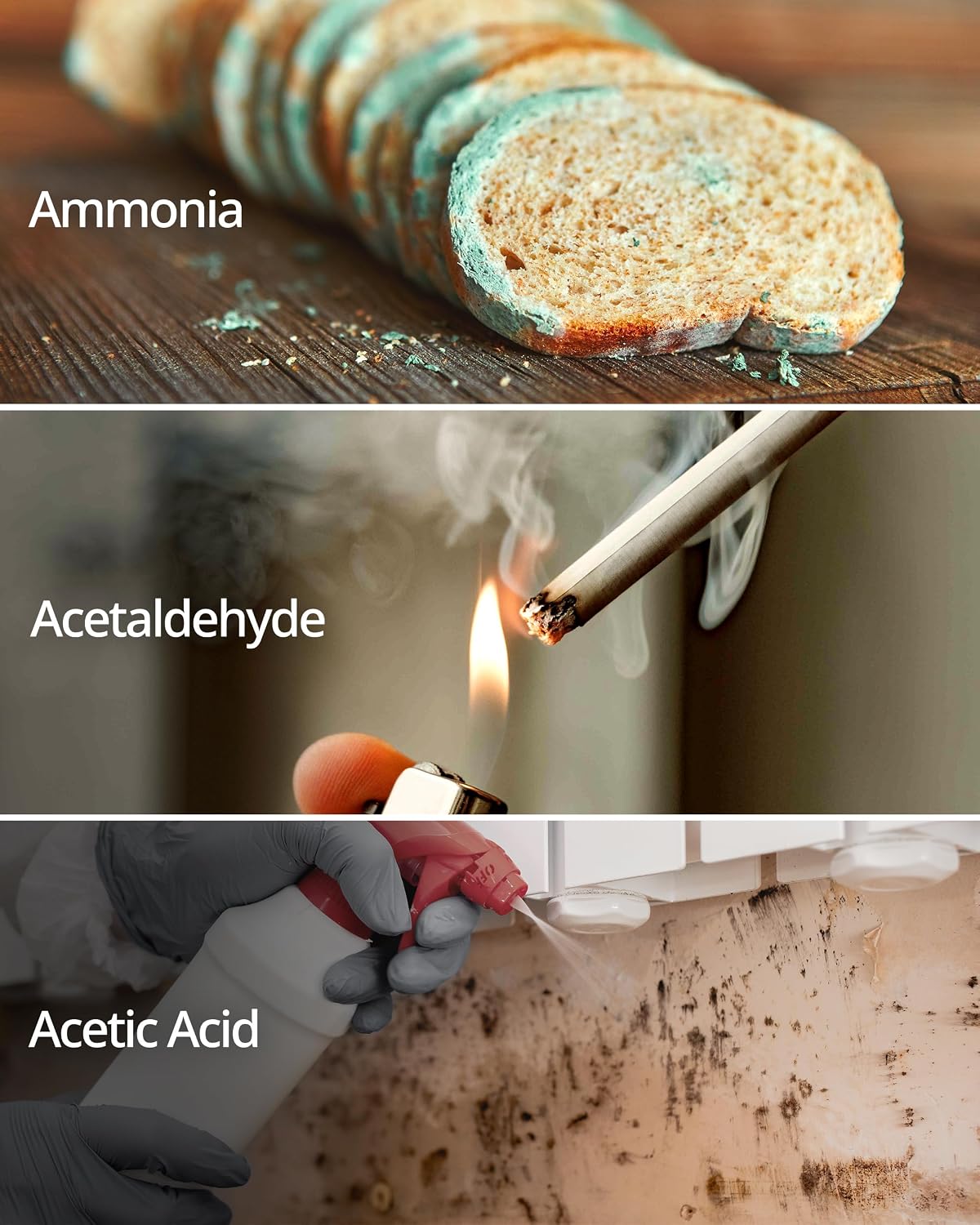
Filter media density and activated carbon quality are not standardized commodities. MERV 13 — a standardized filtration rating defined under ASHRAE Standard 52.2, “Method of Testing General Ventilation Air-Cleaning Devices for Removal Efficiency by Particle Size” — describes a minimum particle capture threshold. It does not specify carbon bed depth, pellet size, or carbon mass. Two filters can both be labeled “MERV 13 True HEPA with activated carbon” and perform meaningfully differently on VOC (volatile organic compound) and odor reduction because one has 30 grams of activated carbon and the other has 8 grams in a thin sandwiched layer. OEM filters for compact purifiers like the Levoit Core 300 are engineered to deliver the airflow resistance and media density the unit’s fan motor was designed around. Owners who switch from third-party generics back to the genuine Levoit filter consistently report the difference in odor reduction performance is noticeable — not marginal — particularly in smaller rooms where the unit runs at middle fan speeds.
The Coway AP-1512HH (the “Mighty”) is a useful test case. Coway’s OEM filter set is well-regarded, though it’s worth noting that even OEM batches can vary in carbon quality across production runs — OEM is not a monolith. The current OEM set earns consistent praise for carbon layer thickness relative to competing third-party options in the same price band. The EPA’s “Guide to Air Cleaners in the Home” notes that activated carbon filter performance degrades with moisture and heat exposure, meaning low-density carbon in a generic filter may exhaust its adsorption capacity faster even if the HEPA media remains intact.
Fit tolerance matters more than it looks on paper. A filter that sits 2mm short in its housing channels unfiltered air around the media rather than through it — what HVAC professionals call bypass leakage. OEM filters are dimensioned to the housing’s exact tolerances. Third-party filters occasionally run slightly undersized, particularly in compact form-factor purifiers where the housing sealing surface is small. Consumer Reports’ Air Purifier Buying Guide flags bypass as a systematic performance risk with non-OEM replacements in sealed-room purifiers, and it’s the kind of failure mode that doesn’t show up on a particle counter until you’re testing at lower fan speeds where the pressure differential is smaller.
Where Third-Party Filters Are a Defensible Call
The case for third-party is strongest at two specific intersections: HVAC panel filters in MERV 11–13 formats, and brands where OEM pricing is already accessible.
Budget-Tier Scenario: Low OEM Delta, Low Substitution Risk
GermGuardian’s Filter B — the standard replacement for the AC4825 series — illustrates a scenario where the third-party value proposition nearly disappears. OEM pricing around $18–$22 removes much of the savings to begin with. When the genuine filter is already priced accessibly, the third-party alternative saves you perhaps $6–$8 per replacement cycle and introduces dimensional and media risk for minimal upside. The IAQA (Indoor Air Quality Association), in its “Filtration and Air Cleaning” technical bulletin, emphasizes that the weakest-link failure mode in residential filtration is almost always an improperly seated filter, not the media efficiency rating itself. At this price delta, buying OEM is the straightforward call.
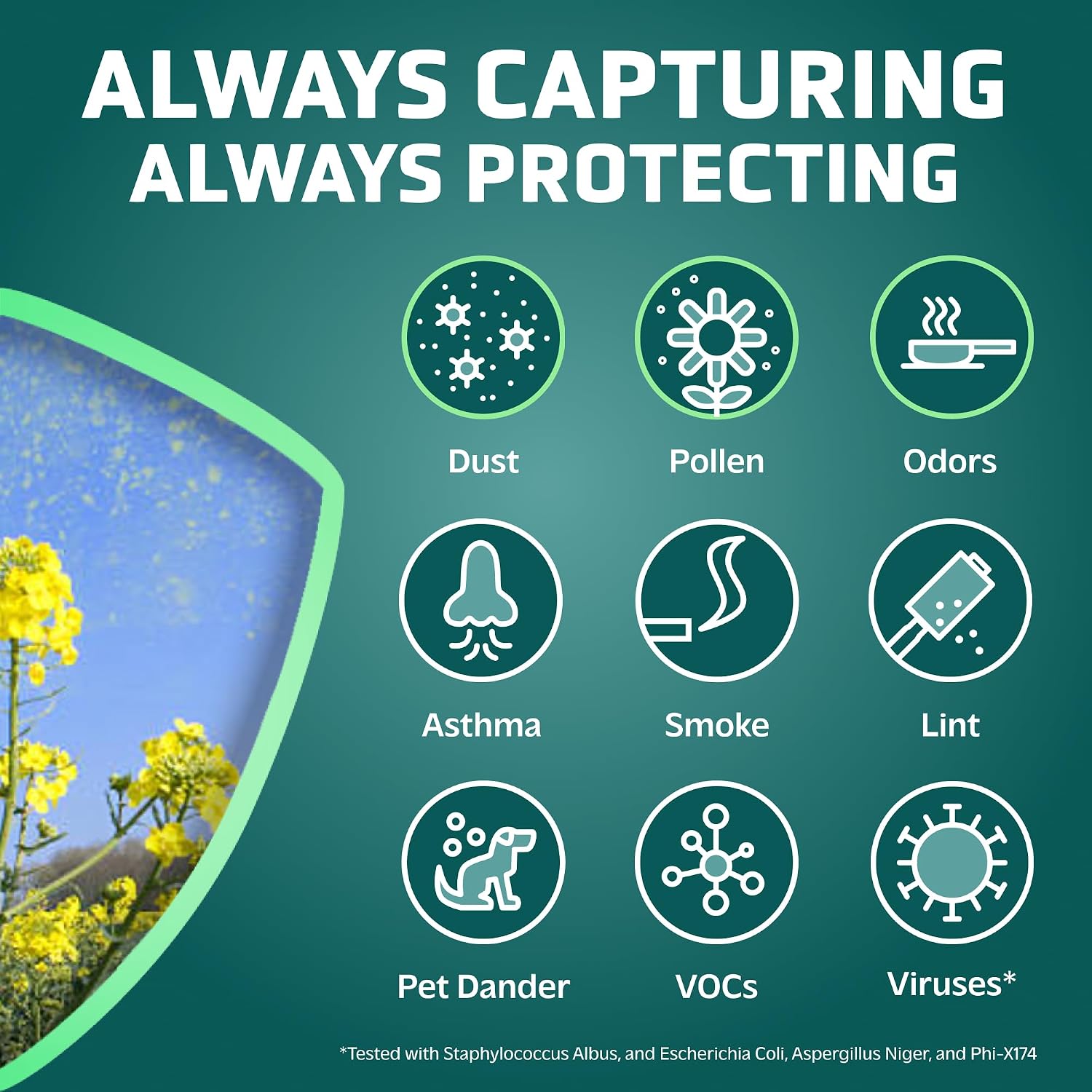
GermGuardian,
$19.89
In stock on Amazon
Check price on AmazonMid-Tier Scenario: Meaningful Savings, Documented Quality
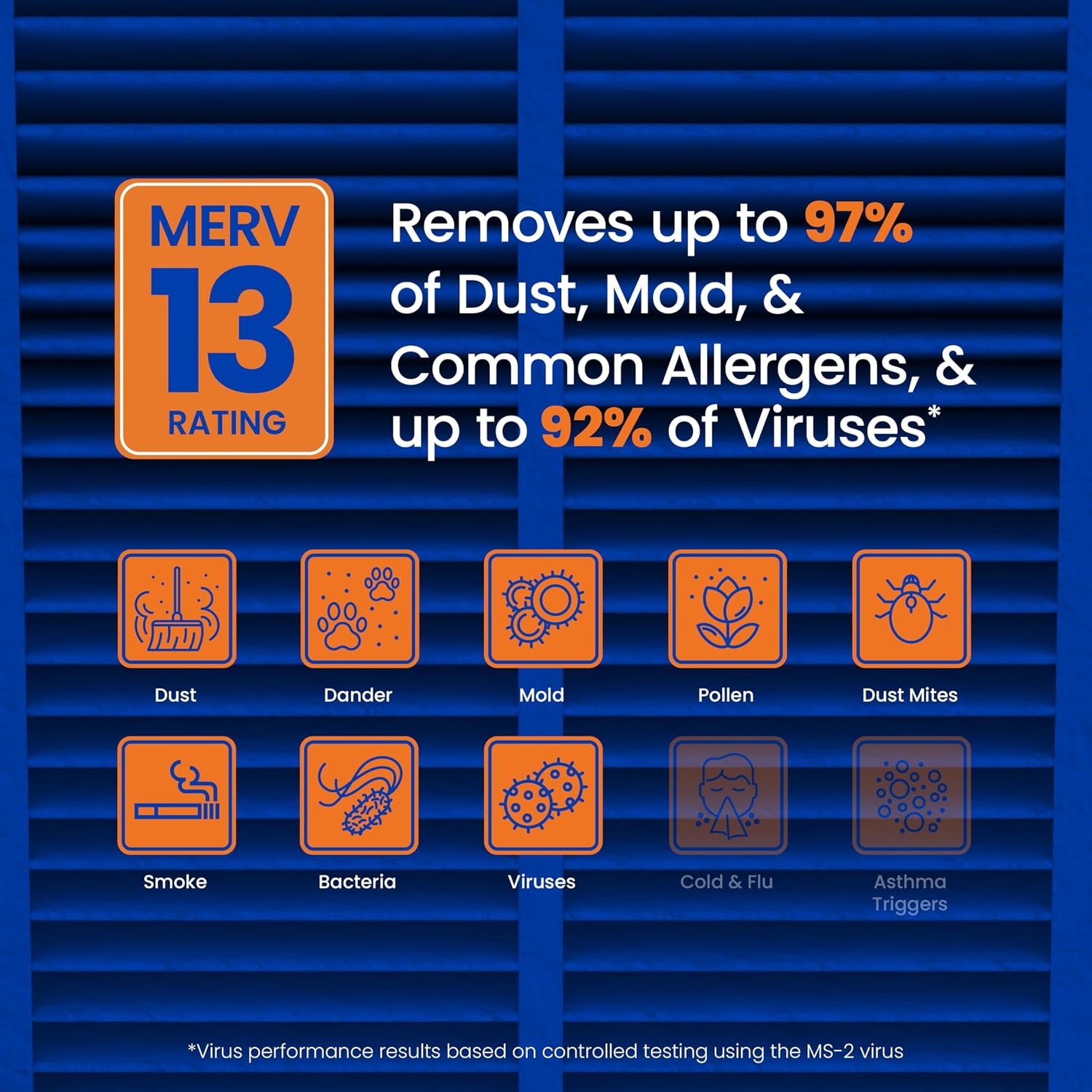
TruFilter’s MERV 13 AprilAire-compatible filters are the clearest example of a third-party product that earns its reviews honestly. Owners report strong build quality, USA manufacturing documentation, and dimensional accuracy that matches the AprilAire 2210/4200-series media cabinets. Several reviewers specifically note using them in DIY box-fan filtration rigs — a practical endorsement of structural integrity. At the MERV 13 specification level, ASHRAE 52.2 testing methodology creates enough of a floor that well-manufactured third-party filters can hit the same particle capture performance as OEM equivalents. The HVAC filter market is also more commoditized than the compact purifier market: media suppliers are fewer, and a competent contract manufacturer can hit MERV 13 consistently. TruFilter provides USA manufacturing documentation that supports the credibility of their ratings — the kind of verification you should demand before trusting any third-party MERV claim.
Coway,
$46.99
In stock on Amazon
Check price on AmazonPremium-Tier Scenario: Carbon Performance Is the Deciding Factor
For purifiers like the Coway AP-1512HH running in odor-heavy or smoke-prone environments, the OEM filter set is where the premium is most defensible. The $270 five-year savings from a quality third-party alternative is real — but only if dimensional fit is confirmed and carbon mass is documented by the manufacturer. New York Times Wirecutter’s long-term air purifier testing methodology notes that filter performance in real-world conditions varies substantially by pollutant type, and that odor and VOC reduction is where filter construction differences produce the most measurable divergence in purifier effectiveness. When the primary use case is wildfire smoke, cooking byproducts, or chemical off-gassing, carbon mass is not a detail to leave to chance. For this scenario, OEM or a rigorously documented third-party equivalent with published carbon weight specifications is the right call.
Genuine
$106.99
In stock on Amazon
Check price on AmazonThe 5-Year Total Cost of Ownership Math
Here’s where the decision becomes quantitative. Assume two filter changes per year — a realistic cadence for moderate-use environments.
5-year filter cost comparison:
| Scenario | Per-filter cost | Changes/year | 5-year cost |
|---|---|---|---|
| Levoit Core 300, OEM | ~$22 | 2 | ~$220 |
| Levoit Core 300, generic | ~$11 | 2 | ~$110 |
| Coway AP-1512HH, OEM set | ~$55 | 2 | ~$550 |
| Coway AP-1512HH, quality third-party | ~$28 | 2 | ~$280 |
| AprilAire MERV 13 (OEM) | ~$45 | 1 | ~$225 |
| TruFilter MERV 13 equivalent | ~$28 | 1 | ~$140 |
The $110 savings on the Levoit looks significant until you account for reported performance degradation on VOC reduction with generics. If you’re running the Core 300 for smoke, wildfire particulate, or cooking odors, the OEM case strengthens. If you’re primarily concerned with PM2.5 (fine particulate matter) in a low-odor environment, third-party HEPA media is harder to differentiate on measured outcomes.
The Coway $270 swing is real. If third-party dimensional fit is confirmed and carbon mass is documented by the manufacturer, the savings are meaningful. If not, the risk-adjusted math tightens considerably.
Frequently Asked Questions
Will a third-party filter void my air purifier’s warranty?
In the United States, the Magnuson-Moss Warranty Act generally prohibits manufacturers from voiding warranties solely because you used a compatible third-party part, provided the replacement doesn’t cause damage. However, if a manufacturer can demonstrate that a third-party filter caused a fan motor failure due to incorrect airflow resistance, warranty coverage for that specific failure could be disputed. The practical risk is low for reputable third-party filters with documented airflow specs, but keep documentation of what you used and when — particularly on units still under a 2–3 year manufacturer warranty.
How can I tell if a replacement filter fits correctly before buying?
Measure your current filter’s outer dimensions in millimeters (filter dimensions are often spec’d in millimeters by manufacturers even when sold in inch-denominated markets). Cross-reference these against the third-party listing’s published dimensions, not just the “compatible with” claim. When the filter arrives, install it and run your hand around the housing seal with the unit on medium speed — you should feel no air bypassing the media edge. If you feel a draft at the seam, the fit is insufficient and you’re getting bypass leakage regardless of what the MERV rating says.
Does the brief “new filter smell” mean the filter is defective?
No. New HEPA and activated carbon media emit low-level off-gassing from the manufacturing process — primarily from binders and activated carbon processing. This is normal and typically dissipates within 24–48 hours of operation. Run the unit on high speed in a ventilated space for the first day. A persistent chemical smell after 72 hours, or a smell that is acrid or plastic-like rather than earthy or musty, warrants more scrutiny — it may indicate lower-grade media or inadequate manufacturing quality control, which is more common in very low-cost generics than in mid-tier third-party brands.
How often do replacement filters actually need changing versus the stated 3-month guideline?
The 3-month guideline on most OEM packaging is conservative and optimized for worst-case environments. New York Times Wirecutter’s long-term filter testing methodology notes that filter life varies substantially by air quality conditions. In a low-pollution suburban home without pets, HEPA media can remain effective for 6–12 months. In a high-particulate environment — near wildfire-prone areas, an urban apartment with street-facing windows, or a home with multiple pets — the 3-month guideline is more realistic. A practical signal: when your unit’s fan noticeably increases noise or reduces airflow at a given speed setting, the filter is loaded. Many smart purifiers with PM2.5 sensors will show baseline air quality readings drifting upward even in clean conditions when the filter is saturated.
Is a MERV 13 third-party filter genuinely equivalent to a branded MERV 13 OEM filter?
For particle capture, a legitimately tested MERV 13 filter — verified by a third-party testing lab under ASHRAE Standard 52.2 — is equivalent by definition. MERV 13 means capturing ≥75% of particles in the 0.3–1.0 micron range and ≥85% in the 1.0–3.0 micron range. Where OEM filters may outperform is in carbon mass for odor and VOC reduction, structural integrity at higher face velocities, and dimensional precision. Ask the third-party vendor for ASHRAE test reports, not just a “MERV 13 rating” claim on the packaging. A filter with no third-party test documentation is not meaningfully “MERV 13” — it’s a marketing claim.
The Decision Rule
Buy OEM if: your purifier is compact (sub-150 sq ft rated CADR), you’re filtering for odors, VOCs, smoke, or cooking byproducts, and the unit is still under warranty. The carbon mass difference is real, the performance reviews support it, and the warranty risk isn’t worth managing.
Buy quality third-party if: you’re running HVAC-format panel filters at MERV 11–13, the vendor provides documented dimensions and an ASHRAE test report, and your primary concern is particulate filtration rather than odor removal. TruFilter’s AprilAire-compatible line meets this bar based on owner-reported dimensional accuracy and manufacturing documentation.
Buy OEM if the OEM is already cheap: GermGuardian’s Filter B at ~$20 is the clearest example — the savings delta doesn’t justify the compatibility risk.
The filter market has matured enough that “third-party equals cheap and bad” is no longer accurate — but it’s also not uniformly safe. The work is in vetting the specific brand and variant, not in making a blanket policy. Match the decision to the application, check the documentation, and run the 5-year math before you add to cart.