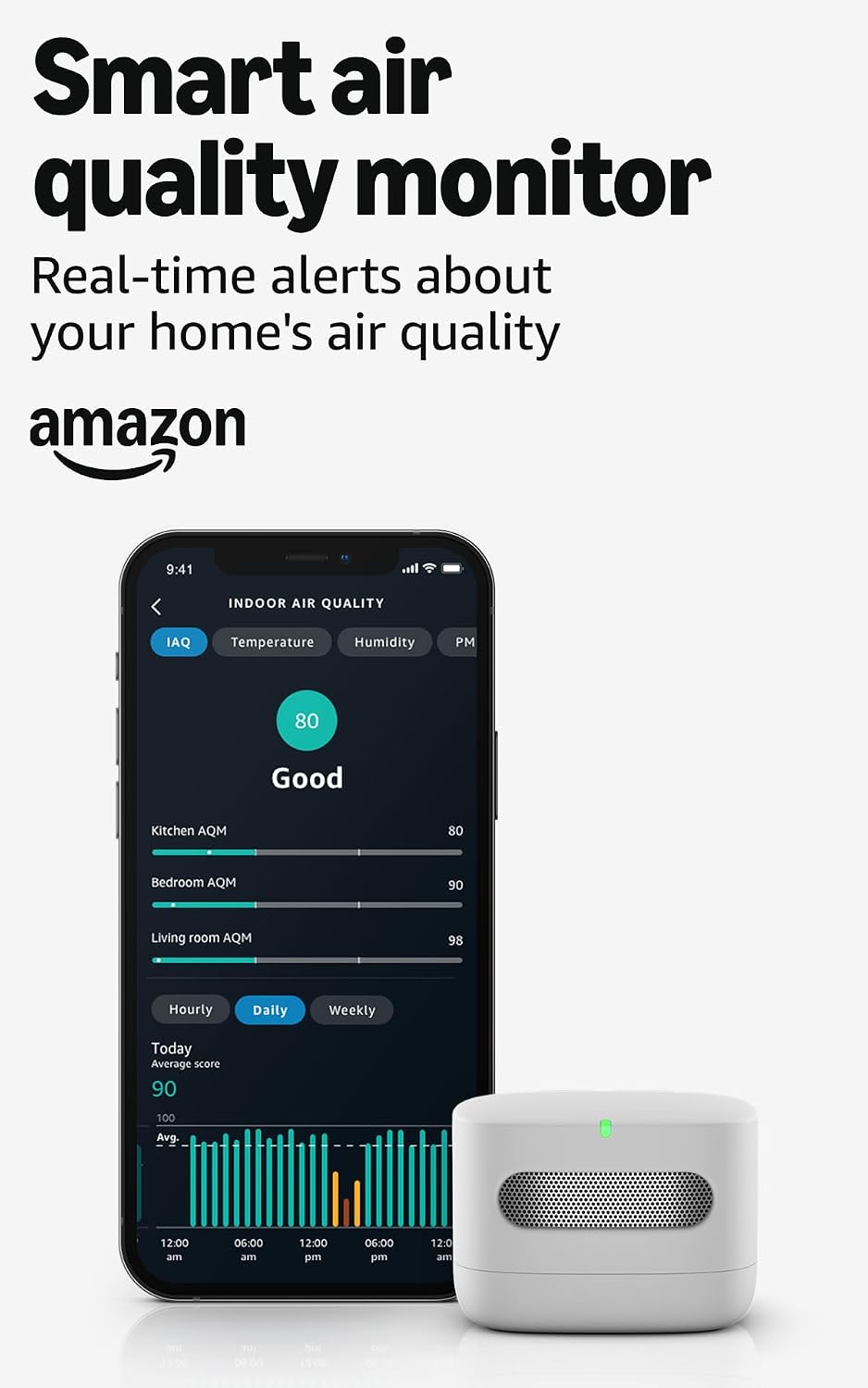
You’ve probably heard the term “air quality monitor” thrown around, but let’s make sure we’re on the same page before diving into the comparison. An air quality monitor is a device — usually about the size of a small speaker — that measures one or more invisible threats in your indoor air: particulate matter (the fine particles from smoke, dust, and combustion, written as PM2.5 or PM10), carbon dioxide (CO2, which builds up in poorly ventilated rooms and causes fatigue), volatile organic compounds (VOCs, off-gassing chemicals from furniture, paint, and cleaning products), radon (a naturally occurring radioactive gas that seeps from soil), and sometimes temperature and humidity. A “smart” monitor adds Wi-Fi or Bluetooth so it feeds data to an app on your phone — and in some cases, triggers your purifier to turn on automatically. This article is for the reader who has already decided they want one and is now trying to figure out which ecosystem is worth building inside.
That last word — ecosystem — is the real decision. A monitor that talks only to itself is a dashboard. A monitor that talks to your purifier, your voice assistant, and your home automation platform is infrastructure. The tradeoffs between those two modes of operation are what this piece is built around.
The Ecosystem Spectrum: From Dashboard to Infrastructure
Before naming products, it helps to define the four tiers of “smart” as they apply to air quality monitors in 2026:
- Standalone dashboards — Wi-Fi connected, app-visible, no automation capability. Useful for discovery; limited for ongoing management.
- Platform-native integrations — The monitor lives inside one manufacturer’s ecosystem (purifier plus monitor from the same brand) and automates only within that walled garden.
- Voice assistant triggers — The monitor surfaces readings to Alexa, Google Home, or Apple HomeKit, and those readings can fire routines on any compatible device on the network.
- Open API / third-party bridges — The monitor exposes data via IFTTT, Home Assistant, or a documented API, enabling sophisticated cross-brand automation.
Most buyers start by asking “which monitor is most accurate?” The more useful question is: “What do I want to happen when this monitor detects something bad?” Your answer determines which tier you need.
The Monitors Worth Knowing, Ranked by Ecosystem Role
Airthings View Plus: The Strongest Case for Radon-Capable Multi-Sensing
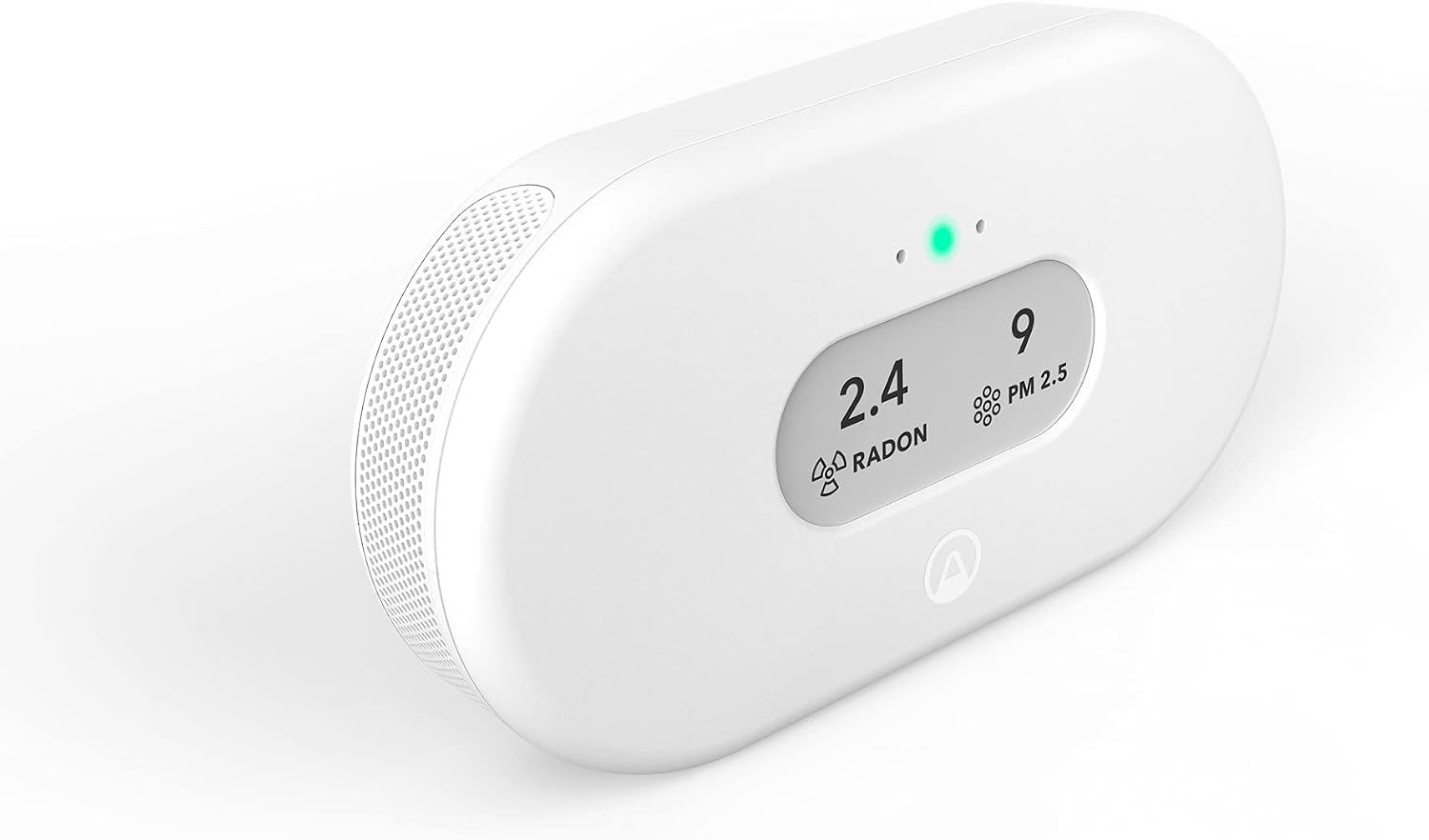
The Airthings View Plus earns the most compelling owner narratives in the category, and for reasons that go beyond spec sheets. The most striking pattern across owner accounts is a specific sequence: a buyer installs the unit, lives with it for months, sees their radon reading climb, and then acts.
According to U.S. EPA guidance on radon — published under the title “Radon” on epa.gov — the action threshold is 4 picocuries per liter (pCi/L), and the EPA recommends considering mitigation even at 2–4 pCi/L. The EPA estimates that radon causes approximately 21,000 lung cancer deaths annually in the United States, making it the second-leading cause of lung cancer after smoking. One widely cited owner account describes discovering radon above 7 pCi/L after nearly three years of exposure — a level the EPA classifies as requiring prompt mitigation. That same owner confirmed remediation success using the View Plus, watching the number drop in real time as their mitigation system pressurized. That is a genuinely powerful validation loop that no other affordable consumer monitor in this comparison cluster can match, because most don’t include radon sensing at all.
The reliability caveat is real, though. Some reviewers have documented sensor degradation following battery replacement — raising a legitimate question about long-term durability after routine user servicing. Airthings monitors are not inexpensive, and a sensor that degrades after routine maintenance is a meaningful ownership risk to price in.
Ecosystem position: The View Plus integrates with Google Home and Amazon Alexa for voice readouts but does not natively trigger purifier automations without third-party bridges — Home Assistant being the most commonly cited path. If your goal is radon awareness plus multi-pollutant trending, it earns its place. If your goal is closed-loop automation, it requires extra work.
Airthings
$263.99
In stock on Amazon
Check price on AmazonAmazon Smart Air Quality Monitor: The Alexa Routine Trigger That Nothing Else Affordable Can Do
The Amazon Smart Air Quality Monitor occupies a specific and defensible niche. Reviewers who describe their purchase journey consistently report the same conclusion: after surveying available affordable options, this was the only monitor that could natively trigger Alexa routines — no bridge, no hub, no third-party subscription required.
That capability matters more than it sounds. If your Winix, Coway, or Blueair purifier has an Alexa skill that accepts voice commands, you can build a routine where a PM2.5 spike above your chosen threshold turns the purifier to high automatically. That’s a closed-loop system built entirely on native integrations, at a price point well below what most competing ecosystems charge. Owners explicitly describe building exactly this workflow.
The honest tradeoff: the Amazon Smart Air Quality Monitor does not measure radon, and its VOC sensor is relatively coarse. It measures PM2.5, CO, CO2, VOC, humidity, and temperature — solid breadth, but no depth on the radon question. If Alexa is your home automation backbone and radon is not a primary concern, this is the most frictionless entry point into real automation at its price class.
Aranet4
$159.00
In stock on Amazon
Check price on AmazonGoveeLife Smart Air Quality Monitor: Closed-Loop Comfort for Govee Ecosystem Buyers
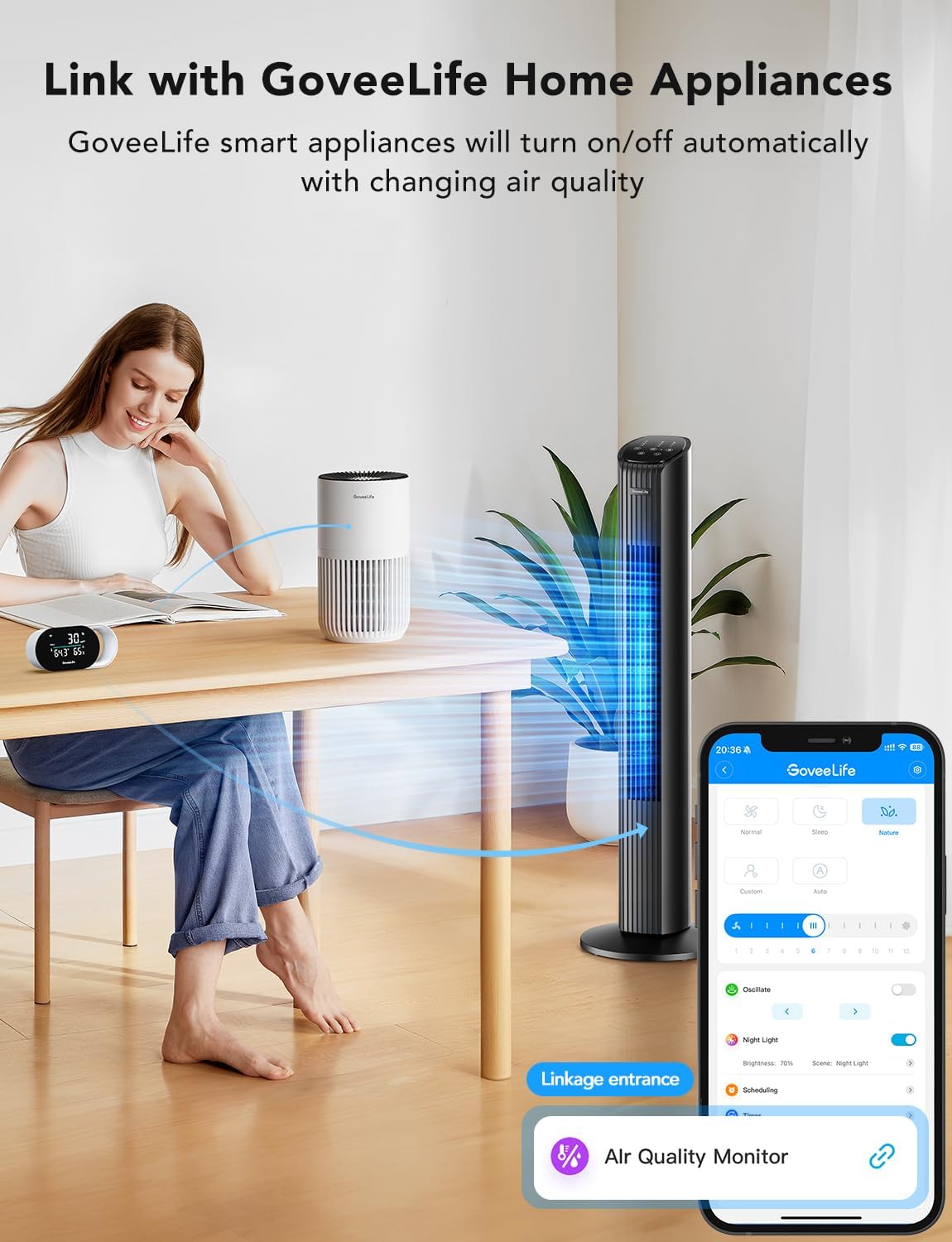
The GoveeLife Smart Air Quality Monitor sits at the opposite end of the openness spectrum from the Airthings. Owners who pair it with Govee air purifiers describe an experience that works well precisely because it stays inside one garden: the monitor detects a VOC spike, the Govee purifier auto-activates, and the monitor confirms the air clears. Multiple owners acknowledge the ecosystem lock-in explicitly — and describe it as a feature, not a bug.
If you’re already in the Govee ecosystem or building one from scratch, this closed-loop behavior is genuinely compelling. The setup is minimal, the automation is reliable within the brand, and the app consolidates both devices. The penalty is that stepping outside Govee for purification requires manual bridges or gives up automation entirely. That’s not a dealbreaker — it’s a constraint to know before you buy.
GoveeLife
$34.94
In stock on Amazon
Check price on AmazonAranet4 and BREATHE Airmonitor Plus: CO2 as the Underrated Villain
Neither the Aranet4 nor the BREATHE Airmonitor Plus is trying to be a multi-ecosystem hub. Both are making a different argument: that CO2 is the most undermonitored indoor pollutant in residential and small-commercial settings, and that tracking it alone changes behavior.
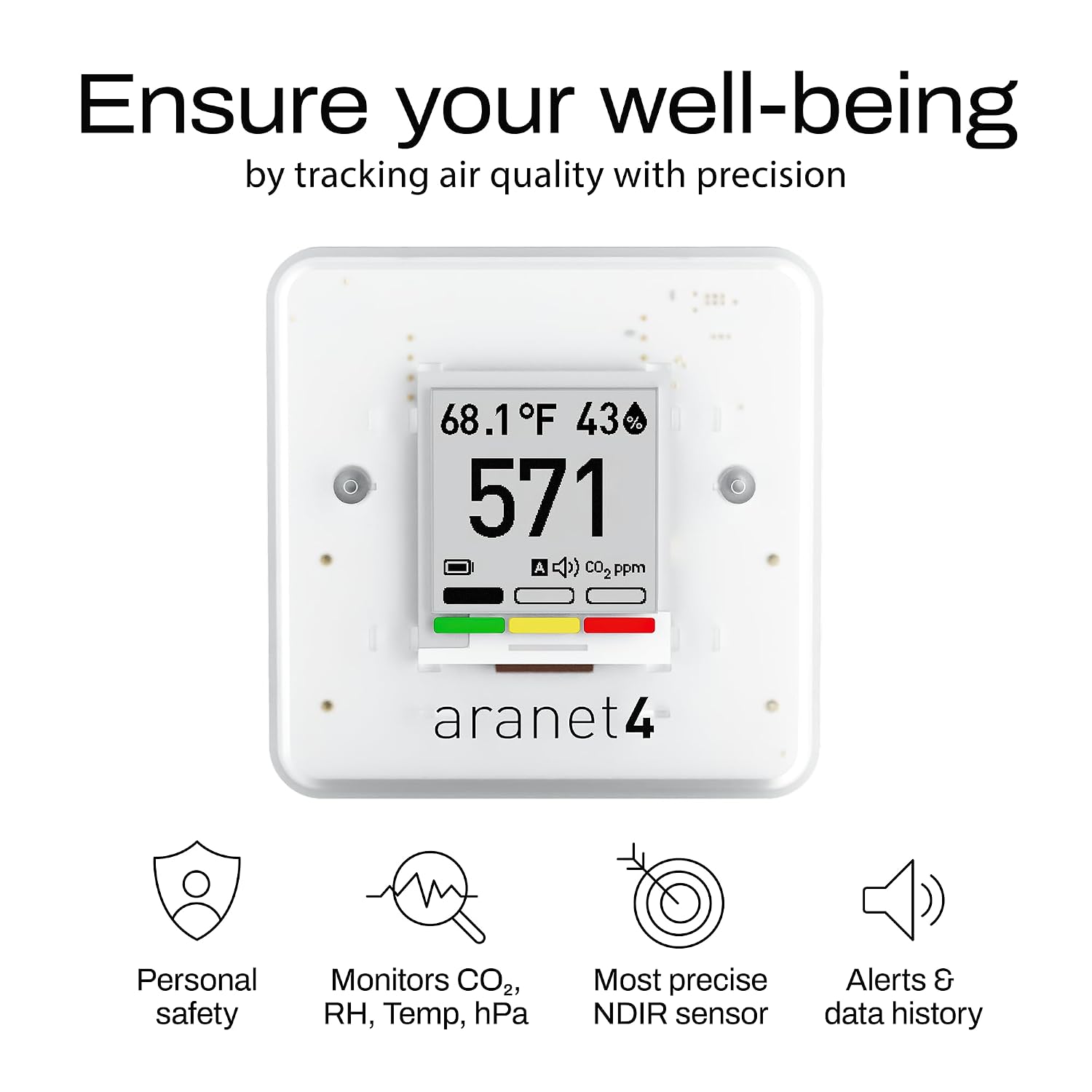
Aranet4 owners are unusually specific in their testimonials. One reviewer identifies CO2 accumulation as the direct cause of daily afternoon grogginess in a specific room — after ventilating that room, the symptom resolved. Another describes using the device to assess ventilation adequacy in a shared workspace.
ASHRAE Standard 62.1-2022, “Ventilation and Acceptable Indoor Air Quality,” published by the American Society of Heating, Refrigerating and Air-Conditioning Engineers (ashrae.org), treats CO2 concentrations above approximately 1,100 ppm in occupied spaces as a meaningful indicator of inadequate fresh-air ventilation relative to occupant load. Research from the Lawrence Berkeley National Laboratory Indoor Environment Group — published under the title “Indoor Carbon Dioxide Concentrations, Ventilation Rates, and Occupant Satisfaction” — links chronic CO2 exposure above 1,000 ppm to measurable impairments in cognitive function. These are not abstract risks.
The BREATHE Airmonitor Plus enters the conversation with a reviewer-reported discovery of 4,500 ppm CO2 in a small home office — a reading nearly four times ASHRAE’s acceptable indoor threshold. That kind of finding changes how someone designs their workday. Neither device triggers external automations natively, but both deliver the insight that makes manual or scheduled ventilation decisions more defensible.
Aranet4
$159.00
In stock on Amazon
Check price on AmazonEcosystem Capability at a Glance
| Monitor | Radon | CO2 | Alexa Routine Trigger | Native Purifier Auto-Mode | Third-Party Bridge Needed |
|---|---|---|---|---|---|
| Airthings View Plus | ✓ | ✓ | Readout only | No | Yes (Home Assistant) |
| Amazon Smart AQM | — | ✓ | ✓ Native | Via Alexa skill | No |
| GoveeLife AQM | — | ✓ | Limited | Govee only | No (within Govee) |
| Aranet4 | — | ✓ only | — | — | N/A |
| BREATHE Airmonitor Plus | — | ✓ | — | — | N/A |
The Decision Frame: If X, Then Y
If your primary concern is radon exposure in a basement, first floor, or any space with soil contact: the Airthings View Plus is the only unit in this cluster that addresses it. Per U.S. EPA indoor air quality guidance published on epa.gov under the title “Indoor Air Quality,” homes in many regions of the United States carry meaningful radon risk that warrants active monitoring. Price in the reliability caveat and plan for a replacement cycle of roughly five to seven years.
If your home automation backbone is Alexa and you want closed-loop purifier control without bridges: the Amazon Smart Air Quality Monitor is the honest answer. Its ecosystem integration is uniquely native at its price point, and no other affordable option reviewed here matches it on that specific axis.
If you’re already inside the Govee ecosystem or willing to build inside it: the GoveeLife monitor delivers the most frictionless automation, with the understanding that you’re trading openness for reliability within the brand.
If your use case is CO2 discovery and ventilation assessment — especially in a home office, shared workspace, or clinic room where cognitive performance matters: the Aranet4’s specificity and owner fidelity make it the credible pick. The BREATHE Airmonitor Plus covers the same problem at a different form factor and has surfaced readings that prompted meaningful behavioral change.
If you want whole-home, multi-zone visibility and are willing to build Home Assistant bridges: the Airthings View Plus anchors the setup, supplemented by dedicated CO2 monitors in high-occupancy rooms.
Frequently Asked Questions
Can an air quality monitor automatically turn on my air purifier? Yes, but only under specific conditions. The Amazon Smart Air Quality Monitor can natively trigger Alexa routines, which in turn can control any Alexa-compatible purifier. GoveeLife monitors auto-trigger Govee purifiers within that closed ecosystem. Most other monitors require a third-party bridge like Home Assistant to enable cross-brand automation.
What is a dangerous CO2 level in a home office or bedroom? ASHRAE Standard 62.1-2022, “Ventilation and Acceptable Indoor Air Quality,” treats sustained levels above approximately 1,100 ppm as an indicator of inadequate ventilation. Lawrence Berkeley National Laboratory research published under the title “Indoor Carbon Dioxide Concentrations, Ventilation Rates, and Occupant Satisfaction” links levels consistently above 1,000 ppm to reduced cognitive performance. Above 2,000 ppm, drowsiness and difficulty concentrating are commonly reported. The Aranet4 and BREATHE Airmonitor Plus owners who discovered readings between 1,500 and 4,500 ppm in enclosed rooms were operating well into the range where ventilation intervention is warranted.
Do I need a separate radon monitor, or will a multi-sensor unit cover it? Of the units reviewed here, only the Airthings View Plus includes radon sensing. Most multi-pollutant monitors — including the Amazon Smart Air Quality Monitor, GoveeLife, and Aranet4 — do not measure radon. The U.S. EPA, in its radon guidance published on epa.gov, estimates radon causes approximately 21,000 lung cancer deaths annually in the United States. If radon is a concern, a dedicated radon-capable device or the Airthings unit is necessary.
Which air quality monitor works with Alexa routines? The Amazon Smart Air Quality Monitor is the clearest answer: it triggers Alexa routines natively at the device level, without bridges or third-party subscriptions. The Airthings View Plus supports Alexa voice readouts but does not natively trigger routines without additional configuration.
How accurate are consumer-grade PM2.5 and VOC sensors compared to professional equipment? Per U.S. EPA guidance on air sensor performance — published on epa.gov under materials addressing particulate matter and air sensor technology — consumer optical particle counters can differ from regulatory-grade reference instruments by 20 to 50 percent depending on particle composition, humidity, and aerosol type. VOC sensors in consumer devices are broad-spectrum and cannot distinguish between specific compounds. These devices are best used for trend detection and relative change, not for regulatory compliance or clinical diagnosis. The value is behavioral: seeing a spike motivates action. The limitation is that the exact number should not be treated as a certified measurement.