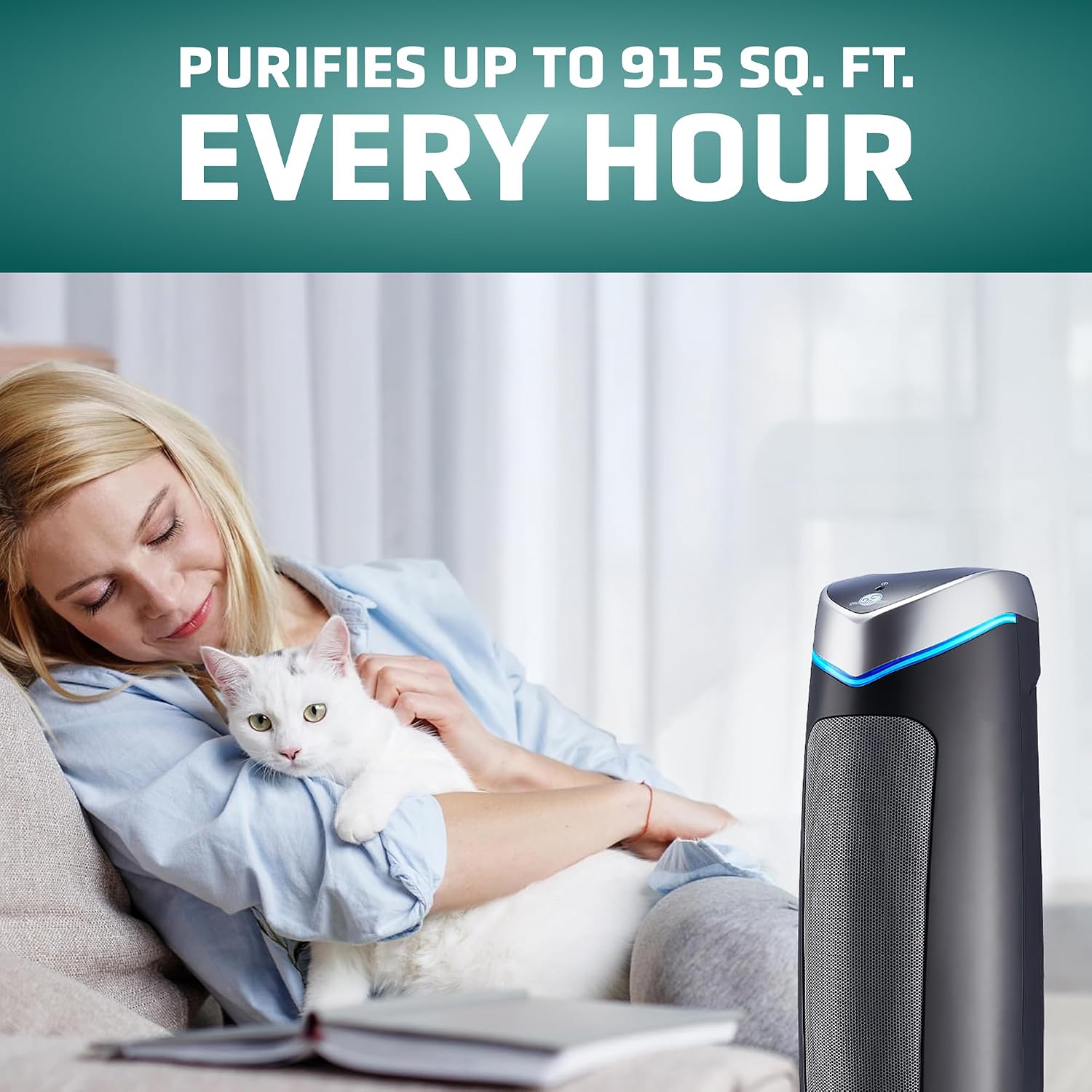
If you’ve been shopping for air purifiers lately, you’ve probably noticed that some models advertise a UV-C light built into the unit. UV-C is a short-wavelength form of ultraviolet light — the kind that can damage the DNA of bacteria, viruses, and mold spores, effectively neutralizing them. It’s the same basic technology used to sterilize hospital surfaces and water treatment systems, just scaled down for a home appliance. The appeal is obvious: a HEPA filter (a dense, fine-fiber mesh rated to capture 99.97% of particles 0.3 microns and larger) traps particles physically, but it doesn’t kill them. UV-C, in theory, handles what the filter can’t. So the question this article answers is simple — does adding UV-C to a HEPA purifier actually make your air cleaner in the real world, and is the price premium worth it?
The honest answer is: it depends heavily on your specific situation, and the marketing often outpaces the science. Let’s work through exactly when UV-C earns its keep and when you’re paying for a feature that does very little.
| EDITOR'S PICK[Sans True HEPA Air Purifier for…](https://www.amazon.com/dp/B0FNMM1Z4H?tag=greenflower20-20) | Mid-tier[GermGuardian 5-In-1 HEPA Air Pu…](https://www.amazon.com/dp/B00895ICIK?tag=greenflower20-20) | Budget pickGermGuardian | |
|---|---|---|---|
| Coverage | 1,854 sq ft | 915 sq ft | — |
| UV-C light | ✓ | ✓ | ✗ |
| Carbon filter | ✓ | — | — |
| Noise (dB) | 25dB | — | — |
| Price | $350.55 | $144.99 | $19.89 |
| See on Amazon → | See on Amazon → | See on Amazon → |
How UV-C Works Inside an Air Purifier — and Where the Gap Is
Understanding the technology’s actual mechanics is the only way to evaluate the tradeoff honestly.
In a UV-C air purifier, air is drawn through the unit, passes a HEPA (and usually a pre-filter plus activated carbon layer), and then flows past one or more UV-C lamps before being expelled back into the room. The UV-C lamp emits light at roughly 254 nanometers — a wavelength that, per the EPA’s indoor air quality documentation, is most effective at disrupting microbial DNA.
Here’s where the gap opens up between the brochure and reality: germicidal effectiveness from UV-C is a function of both intensity and exposure time. A pathogen needs to absorb a sufficient UV dose — measured in millijoules per square centimeter — to be reliably inactivated. In most consumer units, the airflow rate is fast enough that microorganisms pass the lamp in fractions of a second. Published spec analysis of mid-range UV-C purifiers shows exposure times often in the 0.1–0.3 second range, which the ASHRAE Position Document on Filtration and Air Cleaning notes is generally insufficient to deliver the lethal dose required for the most resistant pathogens, including bacterial spores and some enveloped viruses.
The practical takeaway: the UV-C lamp in most consumer-grade purifiers provides a supplemental kill step that matters at the margins, not a decisive germicidal layer on its own. The HEPA filter is still doing the vast majority of the work on particles — including most biological particles. UV-C adds probabilistic value, not categorical safety.
There are exceptions, and they matter for your decision:
- Dwell-chamber designs (found in some commercial and upper-tier residential units) slow airflow past the lamp or use reflective chambers to multiply exposure. These can deliver meaningful germicidal doses. Brands like Molekule (with its PECO technology, a photo-electrochemical oxidation process that uses UV-A light rather than UV-C but operates on similar exposure principles) and certain IQAir configurations are designed with this in mind.
- HVAC-integrated UV-C systems like the RGF Environmental REME HALO operate differently — they irradiate the air handler itself, killing biofilm and pathogens at the coil, which is a legitimate application with documented effectiveness in commercial HVAC literature.
The Cost Stack: What You’re Actually Paying For
Let’s run the math, because this is where a lot of purchase decisions quietly go wrong.
By the numbers — typical UV-C premium across tiers:
| Tier | HEPA-only baseline | UV-C upgrade | Annual UV lamp replacement | 5-Year TCO delta |
|---|---|---|---|---|
| Entry ($50–$150) | ~$80 | ~$120 | $15–$25 | ~$180–$220 extra |
| Mid-range ($200–$600) | ~$350 (Winix 5500-2) | ~$500 (Winix AM90) | $20–$40 | ~$250–$350 extra |
| Premium ($600–$1,200) | ~$700 (Blueair Pro M) | ~$950–$1,100 (Blueair HealthProtect) | $40–$80 | ~$450–$650 extra |
| HVAC-integrated | ~$1,800–$3,500 (Aprilaire 5000) | ~$2,500–$5,000+ (REME HALO install) | $100–$200 | ~$1,000–$2,500 extra |
A few things to notice in that stack. First, the UV lamp itself is a consumable — most manufacturers recommend annual replacement, and many buyers overlook this when comparing sticker prices. Consumer Reports’ air purifier guidance consistently flags lamp replacement cost as an underweighted factor in buyer surveys. Second, at the entry tier, the UV-C feature is almost certainly decorative: the lamp power and dwell time in a $120 unit are not meaningfully germicidal, per published spec comparisons. You’re paying roughly $40 upfront and $15–25/year for marginal-to-zero additional protection.
At mid-range and premium tiers, the calculus shifts. Units like the Winix AM90 pair UV-C with PlasmaWave ionization and a genuine HEPA + carbon stack, and owners in long-run reviews consistently note measurable odor and allergen control improvements — though isolating the UV-C contribution specifically is difficult. The HealthProtect series from Blueair uses its HEPASilent Ultra filtration combined with UV-C in a design that reviewers at Wirecutter note is one of the quieter options at its rated CADR, which is a meaningful differentiator: a unit that can run at performance speed without becoming a nuisance is the only unit that actually gets used.
At the HVAC-integrated tier, the economics flip decisively in UV-C’s favor for the right installation context. Coil-based UV systems like the Lennox PureAir or REME HALO aren’t trying to kill airborne pathogens mid-flight — they’re preventing biofilm and mold growth on the evaporator coil and drain pan, which is a genuine, documented IAQ problem in humid climates. The ASHRAE Position Document specifically calls out microbial growth on cooling coils as a major contributor to indoor biological contamination. For a building manager in a humid climate, a coil UV system with a 3–5 year lamp paying back in reduced HVAC maintenance and cleaner duct air is a straightforward value proposition.
When UV-C Is Worth the Premium
Be specific about your use case before paying the upgrade price. UV-C earns its keep in four scenarios:
1. Medically motivated buyers with immunocompromised household members. If someone in the home is post-transplant, undergoing chemotherapy, or managing a condition like COPD or severe asthma, the marginal germicidal value of a well-designed UV-C system tips toward worth-it. Healthline’s coverage of UV-C research notes that even partial inactivation of airborne pathogens reduces cumulative viral load — and in high-risk households, every reduction matters. Prioritize dwell-chamber designs or HVAC-integrated systems over lamp-in-airstream consumer units.
2. Humid climates and mold-prone homes. UV-C is genuinely effective against mold spores and mold growing on HVAC components. If your basement floods seasonally, you’re in a coastal or high-humidity zone, or your HVAC contractor has flagged coil mold before, a coil-mounted UV-C system (REME HALO, Aprilaire UV options, or similar) addresses a real problem that HEPA filtration alone doesn’t solve — because HEPA handles airborne spores but not the source growing on your equipment.
3. Clinic managers, boutique hotel operators, and multi-person workspaces. Scientific American’s coverage of indoor germicidal UV notes that high-occupancy shared spaces see the greatest pathogen load cycling through recirculated air. Here, a commercial-grade UV-C system with documented CADR and germicidal output specs isn’t a luxury — it’s a liability and brand-reputation consideration.
4. Premium whole-home systems where UV-C is integrated, not bolted on. If you’re already specifying an IQAir HealthPro Plus or a Blueair HealthProtect at the $900+ level, the UV-C complement is designed into the airflow path and doesn’t meaningfully compromise noise performance or filter life. You’re not paying a pure premium for UV-C — you’re choosing the tier where UV-C is done correctly.
When to Skip UV-C and Spend the Money Differently
Equally important: the scenarios where UV-C doesn’t justify the premium and you’re better served by redirecting the budget.
In small apartments and single rooms under 400 sq ft, a high-CADR HEPA unit without UV-C — a Winix 5500-2, a Coway AP-1512HH, or the Levoit Core 400S — will deliver more measurable air quality improvement per dollar than a lower-CADR UV-C unit at the same price point. CADR (Clean Air Delivery Rate, the cubic feet per minute of clean air a unit delivers at a given particle size) is the most direct proxy for real-world performance, and you should never sacrifice CADR for add-on features. Per Consumer Reports’ air purifier methodology, CADR per dollar is the primary ranking metric for standalone units, and UV-C premium models frequently rank below their HEPA-only counterparts on that metric.
If noise is a constraint. UV-C lamps add heat and sometimes require fan speed adjustments to compensate. Budget UV-C units that run their lamp at lower fan speeds (to improve dwell time) often can’t deliver rated CADR quietly. If your unit runs at 50–60 dB at performance speed, you’ll turn it down — and a unit running at 20% capacity because it’s too loud is worse than a quieter, HEPA-only unit running at full speed.
If your concern is particulate matter — dust, pollen, pet dander — rather than biological contamination. UV-C does nothing to particles. A Blueair Blue Pure 311i or similar high-CADR HEPA unit handles PM2.5, PM10, and allergens more cost-effectively than any UV-C equivalent. Spending up for UV-C when your primary symptom is seasonal allergy congestion is misaligned budget allocation.
The Decision Rule
If you’ve read this far, here’s the clean if/then framework to end with:
- If your concern is particulate matter (dust, pollen, pet dander) and your budget is under $400: skip UV-C entirely, maximize CADR for your room size, and compare 5-year filter costs. The Wirecutter’s air purifier guide and Consumer Reports both consistently recommend HEPA-first for allergen control.
- If you have a high-risk household member, live in a humid climate, or manage a shared commercial space: UV-C is worth paying for — but only in a dwell-chamber or HVAC-integrated design. Don’t accept a lamp-in-airstream consumer unit and expect hospital-grade results.
- If you’re specifying a whole-home or HVAC-integrated system at $2,000+: budget for UV-C as part of the system spec from the start, work with your installer on coil placement and lamp replacement intervals, and account for annual lamp cost in your TCO model.
- If you’re evaluating mid-range standalone units ($300–$700) and UV-C is one of several competing features: weight CADR and noise performance at CADR speed first. UV-C earns consideration only if the unit doesn’t sacrifice those metrics to deliver it.
The extra layer is real. Whether it’s worth paying for depends entirely on matching the technology’s actual operating conditions to your specific problem. Buy the feature for what it genuinely does — not for what the box implies.