If you’ve ever bought one air purifier, noticed it made a real difference, and then started wondering what it would take to get that everywhere in the house — you’re already thinking like an ecosystem builder. An air quality ecosystem is a coordinated set of tools — whole-house filters in your HVAC system, standalone room air purifiers (devices that pull air through a filter and recirculate it cleaned), and air quality monitors (sensors that measure particles and gases in the air) — working together so no room is left behind. The challenge is doing it without buying redundant gear or overspending on coverage you don’t need. This article lays out the layered approach: what goes where, in what order, and what the honest five-year cost looks like.
The Three-Layer Framework (And Why Each Layer Does a Different Job)
Before you buy your second or third unit, it helps to understand why these three categories aren’t interchangeable — and why a strong ecosystem needs all three.
Layer 1 — Whole-House Filtration: Your Highest-Leverage Starting Point
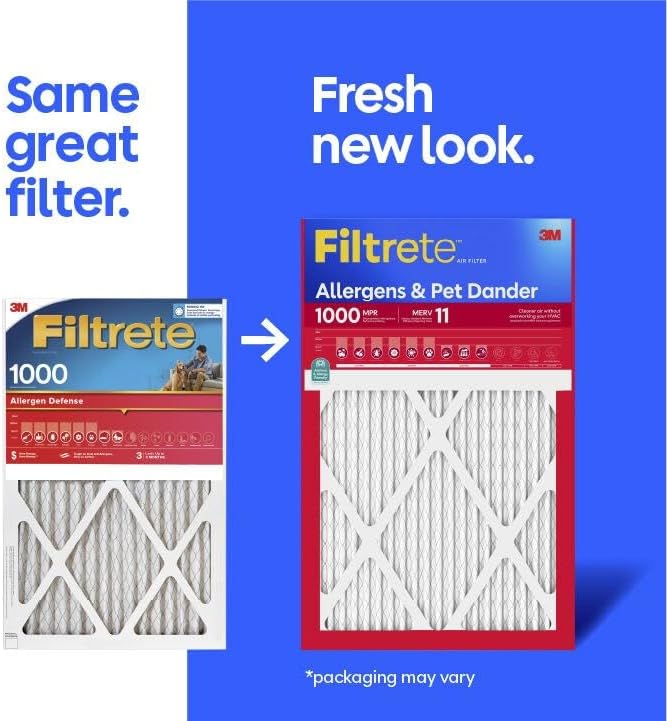
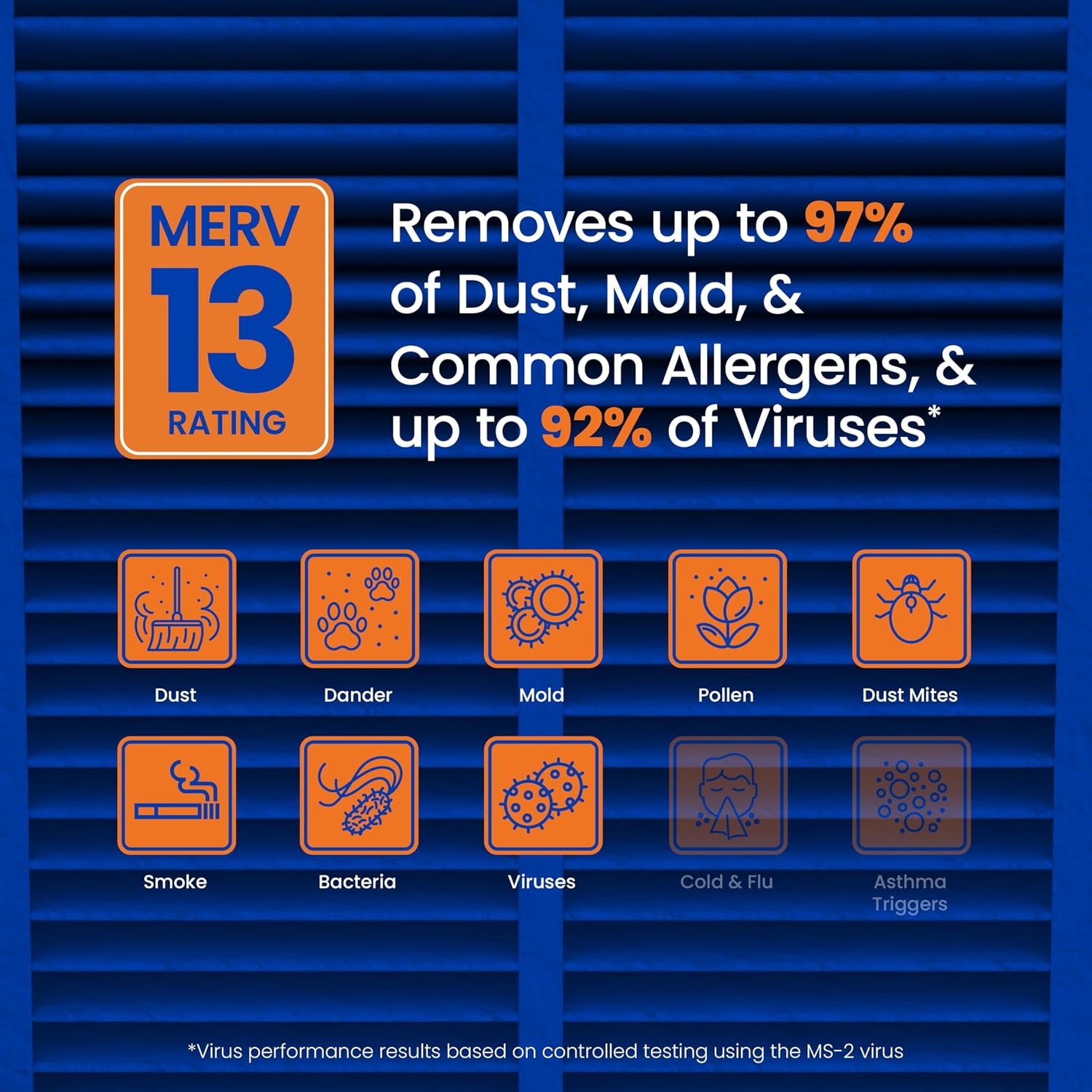
Whole-house filtration happens at your HVAC air handler. When your furnace or central air system runs, it pulls return air through a filter. Upgrade that filter to a MERV 13 rating — MERV stands for Minimum Efficiency Reporting Value; higher numbers trap smaller particles — and every cubic foot of air that passes through your system gets scrubbed of most fine dust, pollen, pet dander, and many airborne droplets. Your HVAC moves 400–1,200+ CFM (cubic feet per minute) through the house continuously, making a good whole-house filter your highest-leverage, lowest-cost-per-square-foot intervention.
The U.S. EPA’s Guide to Air Cleaners in the Home (Indoor Air Division) notes that running the HVAC fan continuously — not just when heating or cooling is active — dramatically increases the volume of air cycled through the whole-house filter and is one of the most cost-effective steps a homeowner can take. If your thermostat is set to “auto,” the fan may only run a few hours per day in mild weather; switching to the continuous “on” fan mode addresses this gap.
The AprilAire 213 and AprilAire 413 are consistently cited by HVAC-integrated buyers as the most reliable 4-inch media filters in the MERV 13 tier. The 213 slots into standard 20×25 cabinets; the 413 covers larger tonnage systems. Owners of both describe reduced visible dust on surfaces within weeks and allergy symptoms that feel home-wide rather than room-specific — which tracks mechanically given the air volumes involved.
Filtrete
$21.99
In stock on Amazon
Check price on AmazonLayer 2 — Room Air Purifiers: Targeted Coverage Where HVAC Falls Short
HVAC filtration doesn’t reach bedrooms with doors closed, doesn’t handle localized pollution sources (a litter box, a home office printer, a sleeping partner’s shed skin cells), and can’t deliver the targeted CADR — Clean Air Delivery Rate, the standardized measure of how many cubic feet of clean air a purifier delivers per minute, as defined by the Association of Home Appliance Manufacturers (AHAM) — needed to turn over a bedroom’s air four to five times per hour. This is the gap room air purifiers fill.
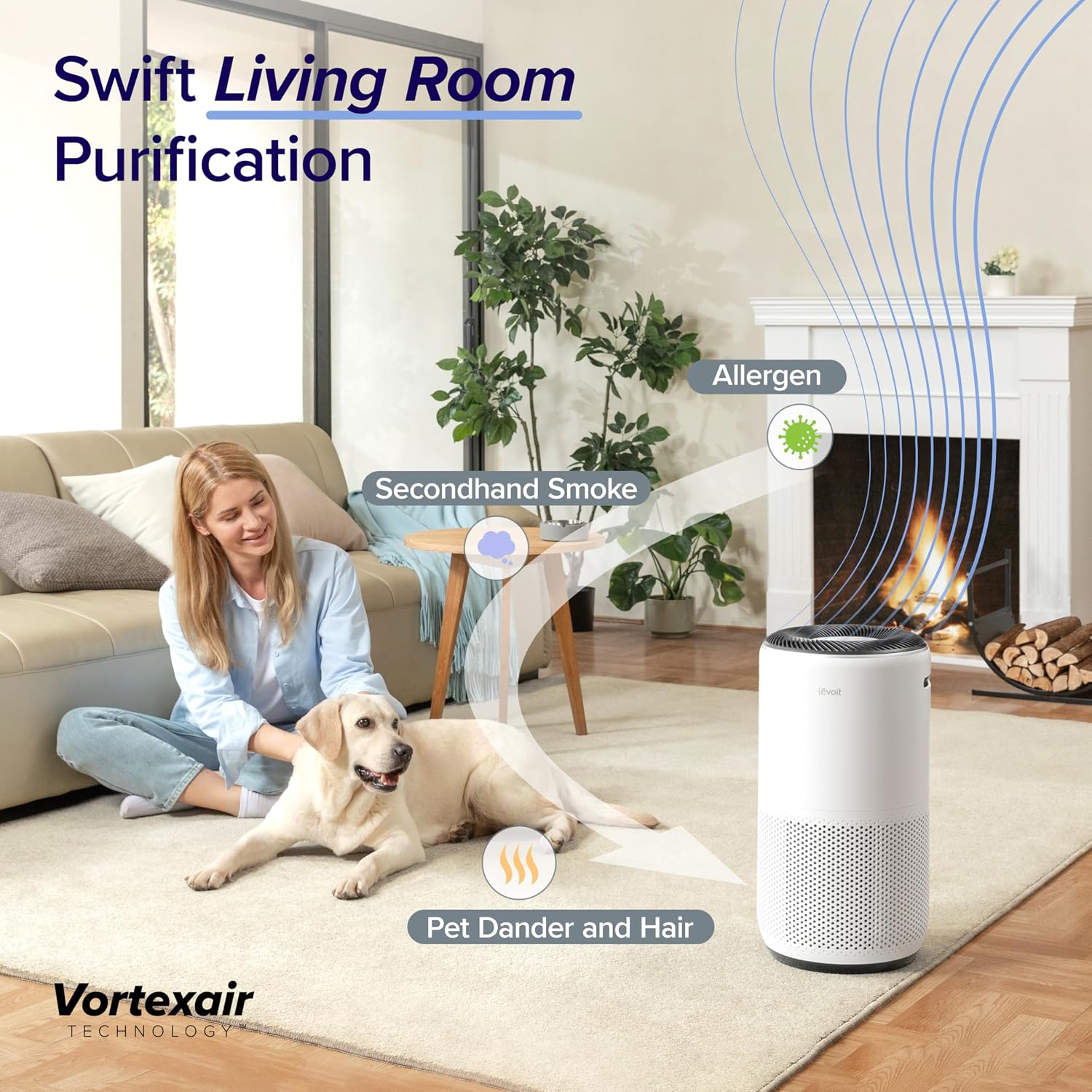
The LEVOIT Core 300 handles bedrooms under roughly 200 square feet efficiently. The Core 400S is the natural upgrade for larger main living spaces up to approximately 400 square feet. Both use H13 HEPA filters — HEPA stands for High-Efficiency Particulate Air; per ASHRAE Standard 52.2, Method of Testing General Ventilation Air-Cleaning Devices, true HEPA media captures 99.97% of particles at 0.3 microns — which represents meaningful capture of the fine particles most associated with respiratory health effects.
Consumer Reports’ Air Purifier Ratings and Buying Guide (2025 update) consistently notes that filter replacement cost per year frequently exceeds the annualized unit cost for many purifiers. The LEVOIT line’s practical advantage is that its replacement filters remain affordable; the trap with some mid-tier brands is a $60–$100 annual filter cost that negates the value of a discounted unit purchase price.
Genuine
$57.88
In stock on Amazon
Check price on AmazonLayer 3 — Air Quality Monitoring: The Decision Layer
Without a monitor, you’re flying blind — running purifiers on a timer and hoping for the best. A monitor that tracks PM2.5 (fine particulate matter), VOCs (volatile organic compounds), CO₂, temperature, and humidity changes the calculus: you can see in real time when a cooking session spiked PM2.5, when a cleaning product off-gassed VOCs, or when outdoor wildfire smoke infiltrated overnight.
The GoveeLife Air Quality Monitor covers all five of those metrics in a compact unit at a sub-$60 price point. Its key practical value is pairing with a compatible smart purifier on auto mode: the purifier ramps up when the monitor detects degraded air and throttles back when readings normalize. For users with smart home platforms — Google Home, Amazon Alexa, or Apple HomeKit — the GoveeLife unit can be integrated into routines that trigger purifier speed changes based on sensor thresholds. Out of the box without a hub, the monitor functions as a visibility tool; the purifier’s own auto mode handles real-time response from its onboard particle sensor.
LEVOIT
$181.93
In stock on Amazon
Check price on AmazonBuilding Order: Which Room Comes First?
The answer is almost always: the bedroom.
You spend seven to nine hours unconscious there, breathing at a lower tidal volume with no conscious ability to move away from a particle spike. The U.S. EPA’s Residential Air Cleaners: A Technical Summary (3rd edition, Indoor Environments Division) identifies the bedroom as the single highest-impact placement for a standalone air purifier precisely because of occupant dwell time. A HEPA purifier in a bedroom with the door closed achieves meaningful air changes per hour without needing a unit sized for the whole house.
After the bedroom, the priority order that emerges from real usage patterns:
- Main living space — highest daytime particle load, cooking aerosols, pet traffic
- Home office or occupied work room — VOC off-gassing from electronics and printer toner, plus extended daytime occupancy
- Problem-source rooms — litter box rooms, workshops, laundry areas
If you have central HVAC with a MERV 13 filter running on continuous fan mode, you can deprioritize hallways and rooms occupied for under two hours daily. The whole-house layer handles the background load; room purifiers handle sustained occupancy.
The Honest Five-Year Cost Math
Here’s where ecosystem builds often go wrong: buyers optimize for sticker price and miss the filter replacement treadmill. The table below runs the real numbers for a three-room ecosystem.
Five-year total cost of ownership — sample three-room ecosystem:
| Component | Approx. Purchase Price | Annual Filter/Consumable Cost | 5-Year TCO |
|---|---|---|---|
| AprilAire 213 (MERV 13, 4-inch) | ~$25 filter | ~$25/yr (replace every 9–12 mo.) | ~$150 |
| LEVOIT Core 300 (bedroom) | ~$100 unit | ~$20/yr (H13 HEPA replacement) | ~$200 |
| LEVOIT Core 400S (living room) | ~$150 unit | ~$35/yr (filter set) | ~$325 |
| GoveeLife AQM (monitor) | ~$50 unit | $0 (no consumables) | ~$50 |
| Three-room ecosystem total | ~$325 | ~$80/yr | ~$725 |
Prices are approximate based on manufacturer-published MSRPs and aggregated retail pricing as of mid-2026. Filter costs assume annual replacement; HVAC filter replacement at 9-month intervals for moderate-use households.
That $725 over five years covers three rooms plus whole-house filtration with real-time data visibility. As Consumer Reports’ Air Purifier Ratings and Buying Guide (2025 update) notes, the ongoing filter cost is the number most buyers underweight at purchase — it holds true here even at the budget tier.
On electricity: the LEVOIT Core 300 draws roughly 8 watts at low-to-medium speed; the Core 400S draws approximately 20 watts at medium. Running both 18 hours per day adds roughly $12–$18 per year to an electricity bill at average U.S. residential rates. For a three-room ecosystem running at moderate speeds, total annual electricity cost is under $30 — not a meaningful line item relative to filter costs.
Making It Smart: Auto Mode and Monitor Integration
The practical integration workflow for most buyers unfolds in two stages.
Stage one — onboard auto mode: Most modern LEVOIT purifiers include a built-in laser particle sensor that detects PM2.5 and ramps fan speed automatically. This works without any external device or app configuration. Set the unit to auto mode and it responds to local air conditions in real time.
Stage two — dedicated monitor for deeper visibility: The GoveeLife Air Quality Monitor adds VOC and CO₂ tracking that the purifier’s onboard sensor typically doesn’t cover. More usefully, it stores historical data so you can identify patterns: the recurring VOC spike at 7 a.m. from a gas stove pilot, the CO₂ buildup that happens when the bedroom door stays closed past 6 hours, the PM2.5 event that correlates with outdoor morning traffic. That historical view changes placement and scheduling decisions in ways that real-time-only readings don’t.
For users willing to spend one-time configuration effort, the LEVOIT VeSync app can be bridged to smart home platforms to enable purifier triggers based on monitor readings. Reviewers who have completed this integration consistently describe the result as a system that “runs itself” — purifiers responding to real conditions rather than fixed schedules.
Frequently Asked Questions
1. If I already have a MERV 13 whole-house filter, do I still need room air purifiers?
Yes, but potentially fewer of them. A MERV 13 whole-house filter on continuous fan mode handles the background particulate load throughout the house — the U.S. EPA’s Guide to Air Cleaners in the Home confirms this reduces fine particles home-wide. But it doesn’t address localized sources or achieve the four-to-five air changes per hour in a closed room that respiratory health protocols recommend. Whole-house filtration is your base layer; room purifiers are targeted coverage for your highest-need spaces.
2. What’s the right order to build coverage — which room gets a purifier first?
The bedroom, almost without exception. You spend more unconscious hours there than anywhere else, and a HEPA purifier in a closed bedroom with seven to nine hours of run time delivers the most health-weighted air change benefit per dollar spent. After that: main living area, then the room with the highest localized pollution source.
3. How often do 4-inch AprilAire MERV 13 filters need to be replaced?
AprilAire’s published guidance recommends replacement every 9–12 months for the 213 and 413 filters in typical residential use. Homes with pets, smokers, or above-average dust load should lean toward the 9-month interval. The 4-inch media depth gives these filters significantly more surface area — and therefore longer service life — than 1-inch MERV 13 panel filters, which typically need replacement every 60–90 days.
4. Does running multiple purifiers significantly increase my electricity bill?
No. LEVOIT Core 300 and Core 400S units at medium speed draw 8 watts and 20 watts respectively, comparable to an LED bulb. Running both units 18 hours per day for a full year adds roughly $15–$25 to a typical residential electricity bill at mid-2026 U.S. average rates. Even a five-unit ecosystem running continuously would add under $75 per year in electricity — a negligible line item relative to filter replacement costs.
5. Can a smart air quality monitor actually trigger my purifier automatically?
It depends on the platform. Most LEVOIT purifiers respond to their own onboard PM2.5 sensor in auto mode without needing an external monitor. Pairing a dedicated monitor like the GoveeLife unit adds VOC and CO₂ visibility and — with a smart home automation platform such as Google Home routines or Amazon Alexa routines — can trigger purifier speed changes based on monitor thresholds. Without a hub, the monitor is a visibility tool; the purifier’s auto mode handles real-time response independently.
The Decision Rule
- If you have central HVAC and no whole-house filter above MERV 8: Start with the AprilAire 213 or 413 and switch your fan to continuous “on.” This is your highest-leverage dollar before you buy a single room purifier.
- If you have MERV 13 whole-house coverage and one purifier: The bedroom is covered. The next unit goes to wherever you spend the most daytime hours with the door closed.
- If you want the system to run itself: Add a GoveeLife monitor to your main living space and configure auto mode on your LEVOIT units. Review historical data after two weeks — you’ll almost always find one surprise pollution source that changes your placement priorities.
- If your goal is clinical-grade bedroom air quality for an allergy, asthma, or immune-compromised household member: A LEVOIT Core 400S running at medium in a closed bedroom, backed by a MERV 13 whole-house filter, reaches the air change rate that respiratory medicine guidelines describe as meaningful — at roughly $175 in initial investment and $35 per year in filter costs.
The whole-home ecosystem isn’t a single purchase decision. It’s a sequenced build that pays dividends at each step. The people who end up with a purifier in every room rarely planned it that way — they just kept noticing the difference.